

Why silence, sensors, and aesthetics are the new currency in the automotive aftermarket

The Car is the New Third Space
For decades, the car air freshener market was simple: a cardboard tree hanging from the mirror or a plastic clip on the vent. It was functional, cheap, and disposable.
But the game has changed.
As Electric Vehicles (EVs) take over the roads, the car interior is no longer just a cockpit; it has become a “Third Space”—a mobile sanctuary between work and home. Drivers use this space for calls, meditation, and decompression.
This shift in user behavior is forcing a hardware revolution. Here are the 3 critical trends we are seeing from the manufacturing frontline in 2026.
1. The Silence Mandate 🤫
In the age of roaring combustion engines, nobody noticed the hum of a cheap diffuser motor. But in an EV? Silence is the ultimate luxury.
When the cabin is whisper-quiet, any mechanical noise—a buzzing fan or a vibrating pump—becomes an annoyance.
- Market Insight: We are seeing a 40% increase in inquiries for “Silent Tech”.
- The Solution: The industry is moving towards Ultrasonic & Solid-State Atomization. Devices must now operate below 15 дБ to be accepted by premium car owners. If your product buzzes, it’s out.
2. Automation amp; Sustainability 🧠
Modern drivers live in a world of “Smart Homes” and “Auto-Pilots.” They have zero tolerance for “dumb” devices that require manual operation.
- The Problem: Traditional diffusers waste expensive essential oils by running when the car is empty.
- The Trend: Vibration/Motion Sensors. The device must detect when the car starts and stops. This isn’t just about convenience; it’s about Sustainability. By only diffusing when a driver is present, we extend the lifespan of the fragrance oil by 300%.
Smart is no longer a premium feature; it is the baseline expectation.
3. From Odor Eliminator to Mood Creator 🌋
In the past, people bought car scents to hide the smell of fast food or pets. Today, they buy them to change their emotional state.
This is the rise of the “Visual Scent Experience”.
- The Design Shift: Consumers are rejecting cheap plastics. They want devices that look like Art.
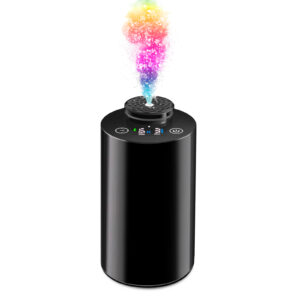
- The “Volcano” Effect: We recently tested a design that combines mist with gradient ambient lighting (inspired by a volcano). The feedback was overwhelming. Why? Because the visual of the mist + the soft light creates a calming psychological effect during stressful traffic.
The Conclusion for Retailers
(元宝写)
Retailers who stock “Smart, Silent, and Beautiful” devices are capturing the EV demographic—a customer base that is willing to pay for a better in-car experience.
Are your shelves ready for the EV generation?
Cloris is a hardware specialist in the Scent Marketing industry. Follow for more insights on manufacturing trends and product innovation.
#AutomotiveTrends #EV #CarAccessories #ScentMarketing #ProductDesign #RetailInsights #Innovation #ThirdSpace
The Car is the New Third Space
For decades, the car air freshener market was simple: a cardboard tree hanging from the mirror or a plastic clip on the vent. It was functional, cheap, and disposable.
But the game has changed.
As Electric Vehicles (EVs) take over the roads, the car interior is no longer just a cockpit; it has become a “Third Space”—a mobile sanctuary between work and home. Drivers use this space for calls, meditation, and decompression.
This shift in user behavior is forcing a hardware revolution. Here are the 3 critical trends we are seeing from the manufacturing frontline in 2026.
1. The Silence Mandate 🤫
In the age of roaring combustion engines, nobody noticed the hum of a cheap diffuser motor. But in an EV? Silence is the ultimate luxury.
When the cabin is whisper-quiet, any mechanical noise—a buzzing fan or a vibrating pump—becomes an annoyance.
- Market Insight: We are seeing a 40% increase in inquiries for “Silent Tech”.
- The Solution: The industry is moving towards Ultrasonic & Solid-State Atomization. Devices must now operate below 15 дБ to be accepted by premium car owners. If your product buzzes, it’s out.
2. Automation amp; Sustainability 🧠
Modern drivers live in a world of “Smart Homes” and “Auto-Pilots.” They have zero tolerance for “dumb” devices that require manual operation.
- The Problem: Traditional diffusers waste expensive essential oils by running when the car is empty.
- The Trend: Vibration/Motion Sensors. The device must detect when the car starts and stops. This isn’t just about convenience; it’s about Sustainability. By only diffusing when a driver is present, we extend the lifespan of the fragrance oil by 300%.
Smart is no longer a premium feature; it is the baseline expectation.
3. From Odor Eliminator to Mood Creator 🌋
In the past, people bought car scents to hide the smell of fast food or pets. Today, they buy them to change their emotional state.
This is the rise of the “Visual Scent Experience”.
- The Design Shift: Consumers are rejecting cheap plastics. They want devices that look like Art.
- The “Volcano” Effect: We recently tested a design that combines mist with gradient ambient lighting (inspired by a volcano). The feedback was overwhelming. Why? Because the visual of the mist + the soft light creates a calming psychological effect during stressful traffic.
The Conclusion for Retailers
The era of the $2 disposable air freshener isn’t over, but the High-Margin Growth is happening in the RETAILER PRICE 99 $ Electronic Diffuser segment.
Retailers who stock ‘Smart, Silent, and Beautiful’ devices are capturing the EV demographic—a customer base that is willing to pay for a better in-car experience.
Are your shelves ready for the EV generation?
Cloris is a hardware specialist in the Scent Marketing industry. Follow for more insights on manufacturing trends and product innovation.
#AutomotiveTrends #EV #CarAccessories #ScentMarketing #ProductDesign #RetailInsights #Innovation #ThirdSpace

 Russian
  English
  Spanish
  French
  Arabic
  German
  Japanese
  Korean