

Where Have All the Profits Gone? The Great Margin Squeeze in the Aromatherapy Diffuser Industry and How to Break Out
Core Theme: Analyze the real reasons behind margin compression across the entire aromatherapy diffuser supply chain, provide actionable solutions for both factories/wholesalers and brand owners, identify new profit growth opportunities based on latest industry data, material trends, and emerging brand strategies.
1. Introduction: 2026 — The Whole Industry Feels the Margin Squeeze
- I’ve been wholesaling aromatherapy diffusers for 12 years, and this year more than ever, I keep hearing: “There’s no money left in this business.”
- From Guangdong factories to wholesalers to overseas brands, everyone across the supply chain is feeling the profit pinch.
- Many factory owners tell me that for the same order, profits are down 1/3 compared to three years ago.
- Today I want to break down exactly what’s happening, and share the breakout strategies we’ve been working on, backed by latest industry reports and success stories from emerging brands
2. Layer 1: Manufacturing Costs Are Up Over 10% Across the Board
- Multiple factors have combined to create this perfect storm of price increases:
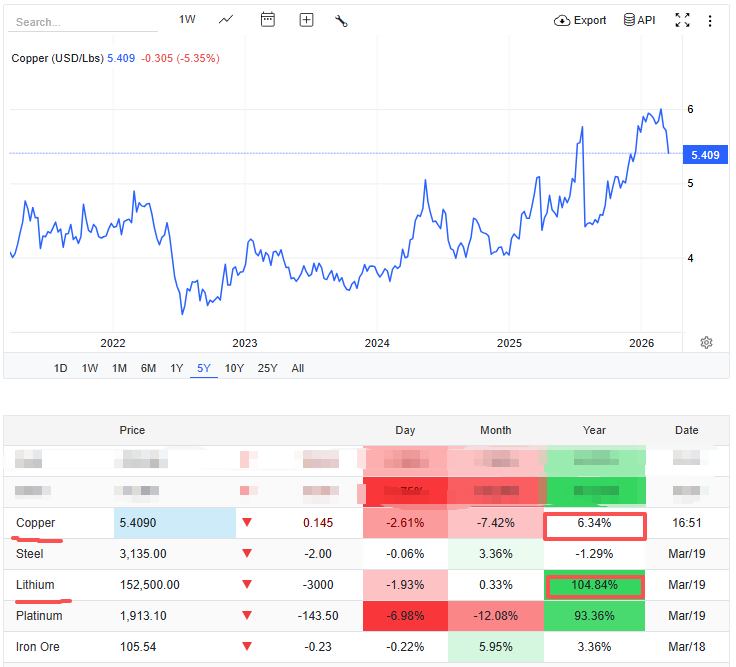
- Metals Price Hike: AI data center build-out, EV boom, global grid upgrades — all drive massive demand growth for copper and aluminum, pushing prices steadily up. Diffusers rely on metals for PCBs, hardware, and springs — so our costs go up directly.
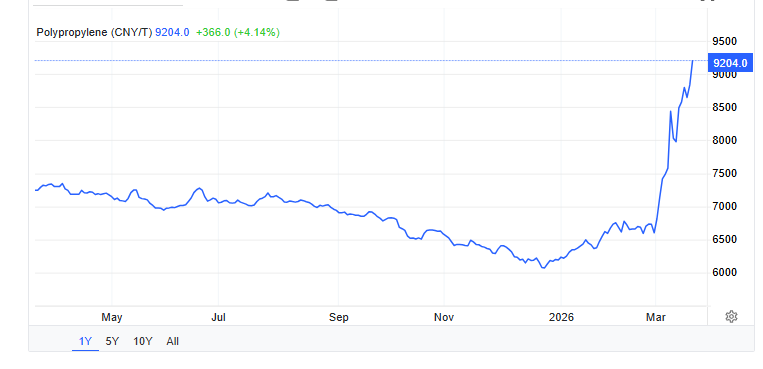
- Plastics Price Hike: Ongoing geopolitical tension in the Middle East keeps crude oil prices high, which means price increases across all common engineering plastics: PP, ABS, PC, PA6. Our factory partners in Guangdong have been complaining about this constantly in recent months — core raw materials are up over 10%.
- Component Price Hike: Batteries, air pumps, and atomization plates — all core components are up over 15% since the start of this year.
- Coming Soon: PCB Price Hike: My contacts at TI tell me most chips will increase price by 8% starting April 1. The impact on diffuser PCBs should be moderate, but we’ll still see some uplift.
- Currency Exchange Makes It Worse: CNY/USD went from 7.1 to 6.8 — that’s an immediate 4% margin haircut on every USD order you receive. Convert the same $100k, and you get ¥300k less than before. Four points of profit just gone.
- Factories without product differentiation dare not raise prices: With wholesale volumes relying on long-term customers, everyone is afraid of losing clients, so they absorb the increases themselves, and margins get eaten away.
- Factories with unique patents can manage this better: We usually work with customers to share the cost pressure incrementally.
3. Layer 2: Freight Rates Have Skyrocketed — Geopolitics and Boom in Express Shipping Drive Increases
- Since end of 2025, carriers have announced collective rate hikes, and exporters are feeling the pain:
- Far East to Northern Europe: $3,700 per 40ft container, up nearly 30% year-over-year
- Mediterranean route: Over $5,500 per 40ft container
- Air freight increases are even more dramatic:
- Europe: From ~$2/kg to $5.5-$6/kg
- USA: From ~$4.5/kg to $7-$8/kg
- For sea freight bulk orders, freight now accounts for several more points of your total cost; for small air freight shipments, freight can eat up half your margin.
4. Layer 3: Customer Acquisition Costs Are Soaring — Advertising Gets More Expensive Every Year
- Recently many customers told me: Ad platform price increases have been so big they can’t adapt quickly enough. Most profits are already eaten up by freight, packaging, labor, and operating expenses — there’s nothing left for advertising, so order volumes shrink.
- Let me break down why this is happening:
- AI boom drives massive demand for computing power, Google/Facebook infrastructure costs go up, and those get passed directly to advertisers — overall ad costs are up over 20%.
- More and more sellers enter the diffuser market, increasing competition for ad inventory.
- Today, the cost per conversion on Google Ads is almost double what it was three years ago.
- Small and medium brands already have limited budgets — after paying for ads, there’s often no profit left.
- Independent site sellers are caught between a rock and a hard place: no ads = no traffic, with ads = no profit.
5. Layer 4: Price War Pressure From Temu, Shein, TikTok Shop, and Amazon
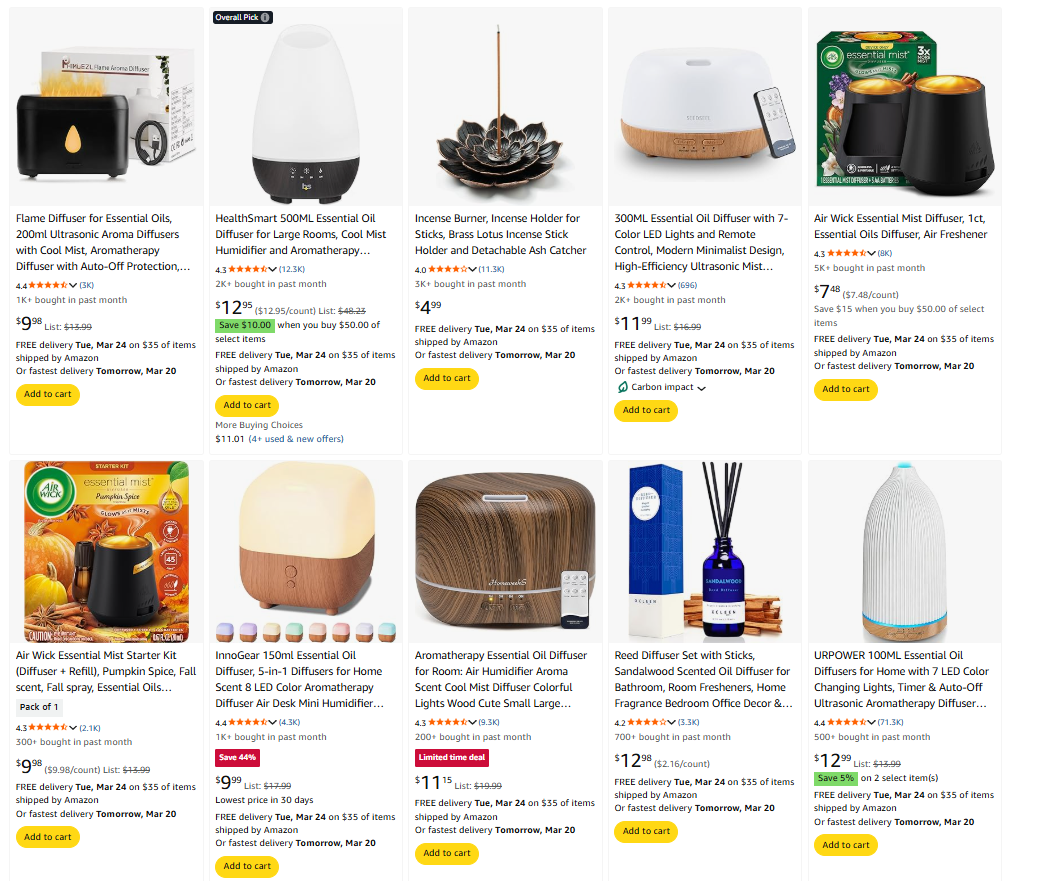
- Back in 2023, a Shenzhen friend of mine sold a 200ml diffuser + 6 low-quality essential oils + Himalayan salt on Amazon for $8 — and only made 10% margin. Back then, the market price was around $20.
- These mega-platforms rely on capital-backed extreme low-price strategies, and they drag down consumer price expectations across the board.
- Consumers become increasingly price-sensitive, forcing brands to cut prices, which compresses margins further.
- Many small brands find themselves stuck: no price cuts = no sales, with price cuts = no profit.
- Worse still: low-quality cheap products damage the reputation of the entire industry, pushing consumers towards even lower prices, squeezing out honest manufacturers who focus on quality.
6. The Bottom Line: How Much Profit Have We Actually Lost?
- Factories: 10% raw material increase + 4% currency hit = ~1/3 of profit gone for the same order
- Brands: Cost increases from materials + freight + ads = at least half your profit has disappeared
- This isn’t a temporary fluctuation — it’s the “new normal” created by multiple cyclical forces hitting at once, and it’s likely to get more challenging before it gets better.
- According to the 2026 global market analysis report, despite margin compression, overall market growth continues: The global market will reach $22.83 billion in 2026, with a 8.6% CAGR. So the opportunity is still there — you just need to find the right path to break out.
- And the good news is: Many brands have actually managed to grow despite this pressure lately. How did they do it?
7. Breakout Strategy 1: Product Upgrade — Command Premium Prices With Better Materials and Design
- How Vitruvi succeeded: Triple premium margins from ceramic + minimalist design
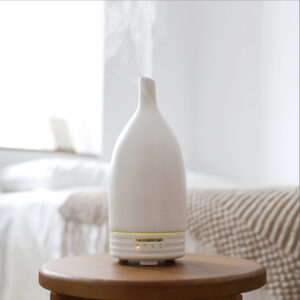
- Vitruvi doesn’t compete on price — they go straight for the premium design route, with full ceramic bodies. The result is a beautiful object that looks great on your living room shelf.
- This aesthetic naturally goes viral on Instagram and Pinterest — users share spontaneously, it goes viral, and you save a fortune on customer acquisition.
- Consumers will pay three times more than for a standard plastic diffuser, and actually make higher profits than the mass market.
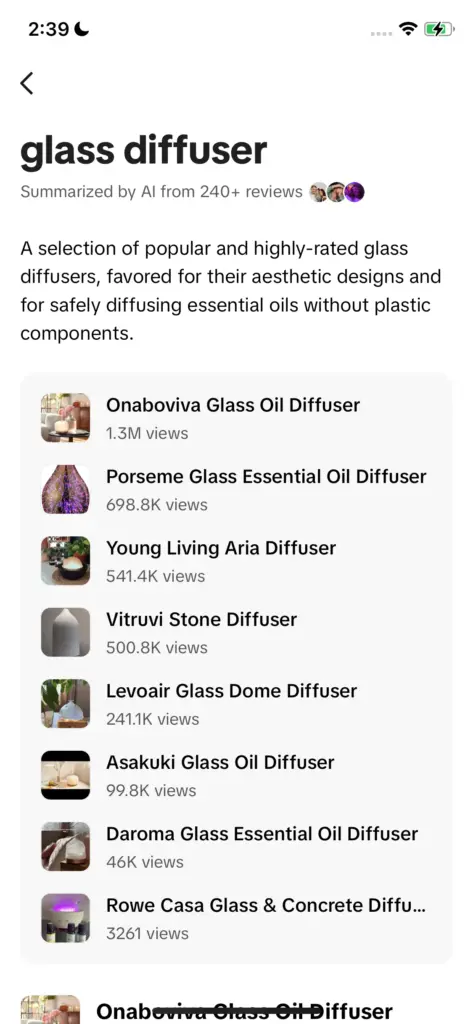
- Healthy sustainable materials is a massive trend — glass diffuser search is up over 200%
- Consumers are more health-conscious than ever: Recycled plastic can smell off, and consumers worry about plasticizer leaching into essential oils. They won’t come back after one bad experience.
- Solid wood, ceramic, glass — all these healthy sustainable materials cost a bit more, but you can charge a lot more, and consumers are happy to pay.
- Glass diffusers have exploded in popularity recently: Google search volume is up over 200% in three years, and #glassdiffuser has over 5 billion plays on TikTok. The transparent look aesthetic fits perfectly with modern home decor, and it’s extremely popular with the premium segment. The prerequisite is that the parts coming into contact with the essential oils are made of glass, rather than PP.
- Our data shows: Products positioned as “eco-friendly & healthy” convert over 20% better than commodity products, and have higher repeat purchase rates.


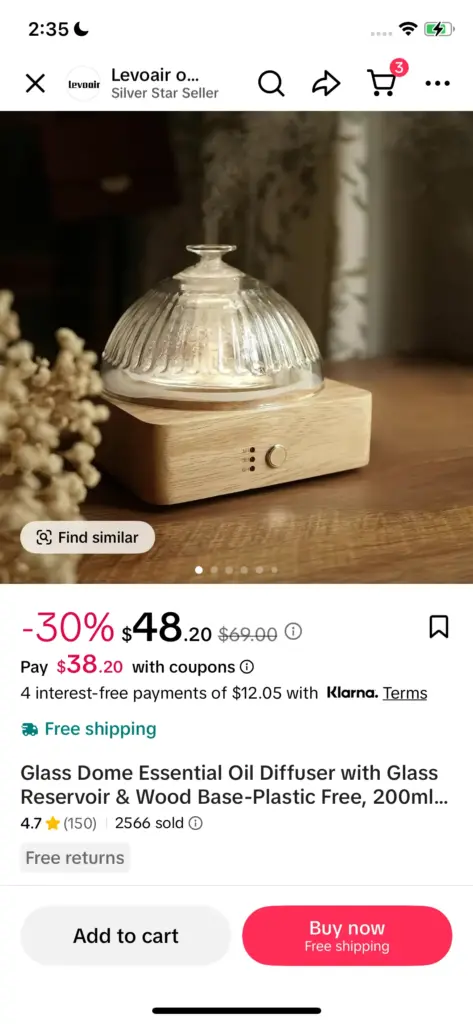
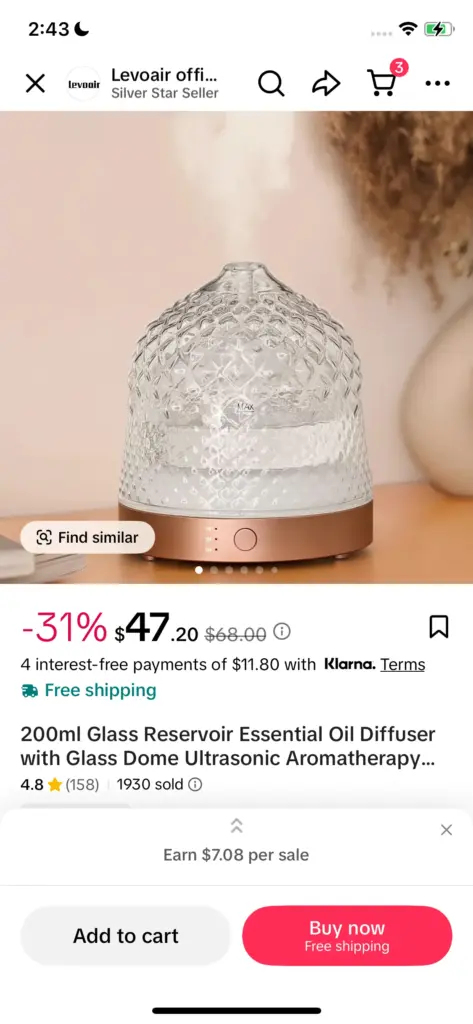
- Great design IS the best marketing
- Today, home decor matters more than ever — a diffuser isn’t just a functional device anymore, it’s a decorative piece for your home.
- Minimalist Scandinavian style, natural wood, wabi-sabi — different designs fit different decor aesthetics, and hit consumer pain points perfectly.
- Beautiful products get shared spontaneously on social media — free promotion, and your customer acquisition cost naturally goes down.
- Chinese emerging brands are already masters of this: Tosummer and Mansong have both broken out using design and Eastern aesthetics. Ceeniu has built premium diffuser sales growth through technical innovation, design creativity, and texture — I’ve visited their parent company Torras, they have over 100 people in R&D with equity incentives for the team. That’s how you build a premium brand.
- Ceeniu’s Best-Selling Car Diffusers:

8. Breakout Strategy 2: Technology Upgrade — Improve User Experience, Escape Price Competition
- Next-generation waterless ultrasonic nebulizing technology solves the pain points of traditional water-based models
- Traditional water-based diffusers require water refills, are hard to clean, build up scale, and dilute your essential oils, making the fragrance less pure.
- New technology directly nebulizes pure essential oil — quieter operation, better fragrance performance, no water required — extremely convenient.
- It’s a game-changer for cars and small office spaces — user experience improves dramatically, and consumers will pay a premium for it.
- According to recent patent filings, this is the hottest innovation area for 2026, with major brands all investing heavily — Ceeniu is one example.
- Quiet technology breakthrough: Latest patents deliver under 15 decibels
- Good diffusers should be completely silent at night on your bedroom nightstand — that’s a core competitive advantage. We’ve worked with models like UD500, UD10, UD11, UD503 — these have been validated by the market and deliver stable quality.
- Patent No. CN117019500A achieves this level of silence. Brand customers can consider acquiring territorial rights or use the patented technology to develop new models — feel free to contact us to discuss cooperation.
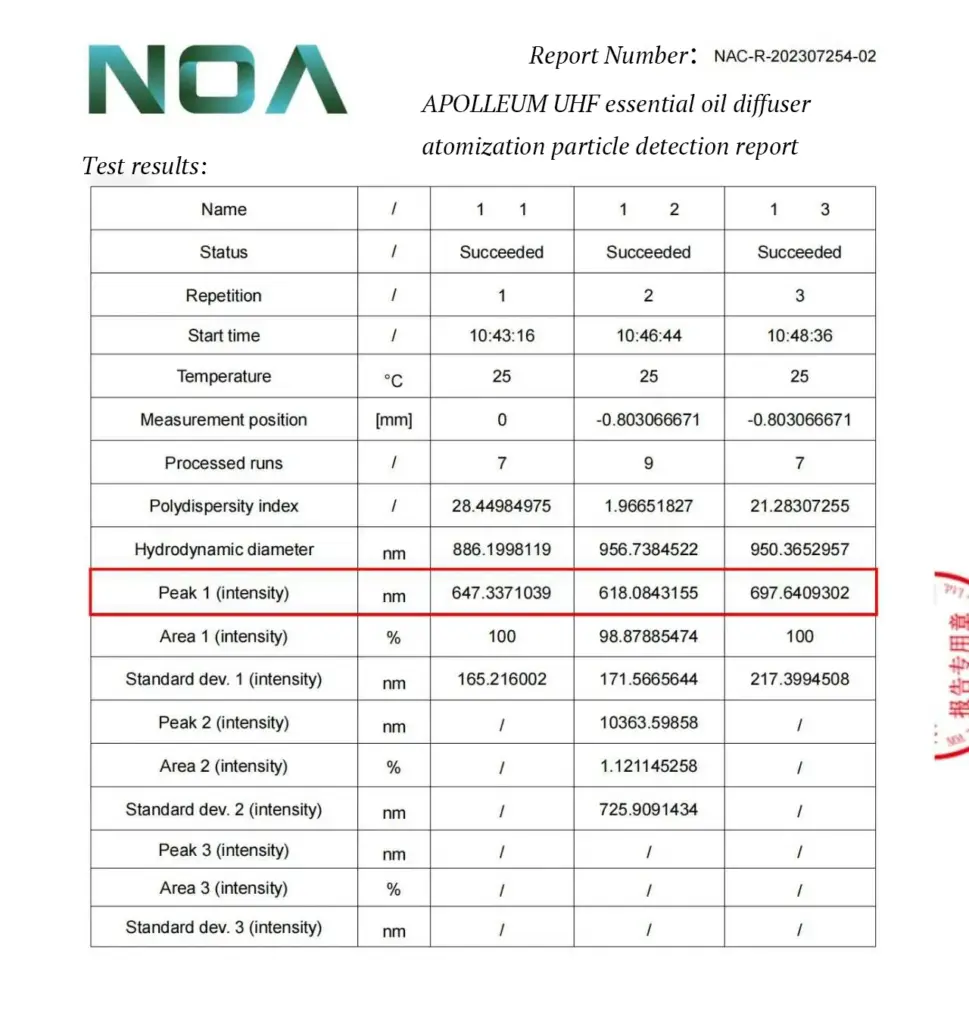
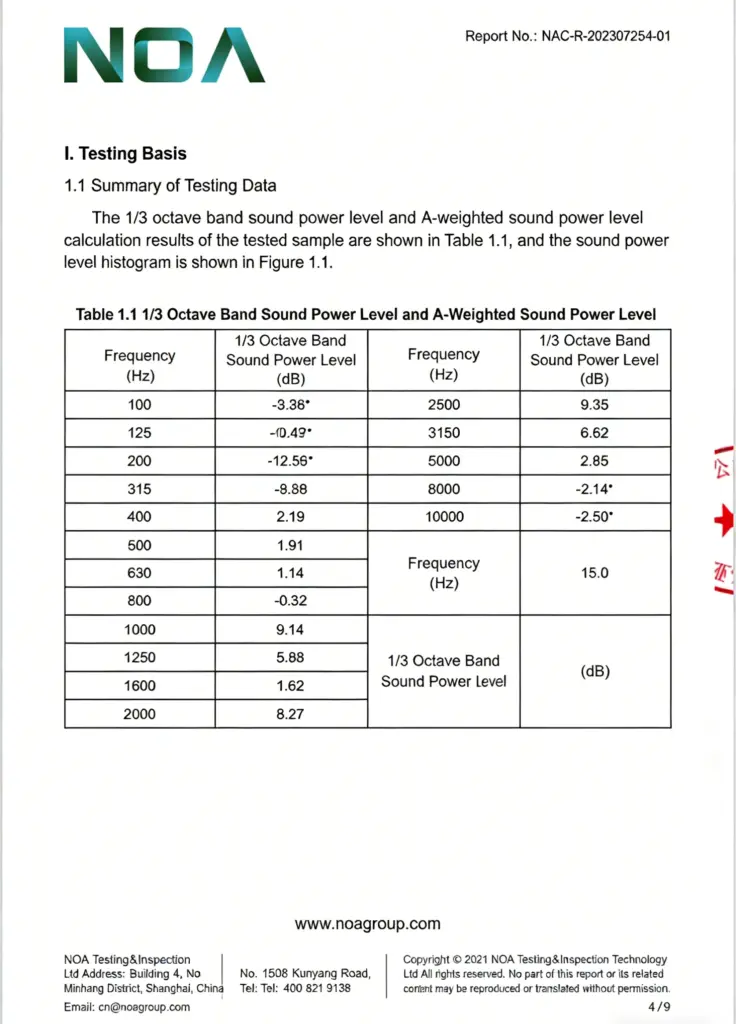
- Smart upgrade is the new standard: WiFi + APP control
- APP scheduling, remote control, integration with smart home ecosystems like Alexa/Google Home — these features are becoming standard for premium models, and they allow you to charge more.
- APP development typically costs $4,500-$8,000, adding about $3 to the bill of materials per unit. MOQ is normally 1,000, but some factories support trial orders of 300 units even for custom development — there’s no barrier to getting started today.
- Patent protection is non-negotiable: Build your moat
- Emerging brands now patent everything from design to core technology — this prevents copying, and builds your defensibility. We can help you apply for patents in China with zero service fees.
A Leak-Proof Diffuser:
- Emerging brands now patent everything from design to core technology — this prevents copying, and builds your defensibility. We can help you apply for patents in China with zero service fees.
9. Breakout Strategy 3: Latest Emerging Brand Playbooks — Detailed Analysis of Successful Cases
- Playbook 1: DTC Brand + Social Content Marketing — cut out middlemen, keep all the margin
- Sell direct-to-consumer, don’t rely 100% on Amazon — build your own independent site + Instagram/TikTok content strategy.
- Great design + great user experience drives spontaneous UGC — content goes viral, and your customer acquisition cost is way lower than buying ads.
- Vitruvi went from zero to tens of millions in revenue in just a few years with exactly this strategy.
- Key insight: The product is the content — if it’s beautiful and photographable, people will share it.
- Playbook 2: Target Niche Segments — Don’t Fight in the Red Ocean
- Don’t start with “general purpose diffusers” — carve out a specific niche:
- Automotive: Diffusers designed specifically for car models like Tesla — this is already a new breakout track, example brand: Daily Lab
- Hospitality: Bulk orders for boutique hotels and wellness resorts — stable orders, better margins
- Yoga/Wellness: Pair with essential oils, position for relaxation and meditation — consumers will pay a premium
- Gifting: Custom gift packaging — holiday and occasion gifting is huge, higher average order value and better margins
- Niche segments have less competition, consumers are less price-sensitive, so you enjoy better margins.
- Don’t start with “general purpose diffusers” — carve out a specific niche:
- Playbook 3: Product Bundling + Subscription — Recurring Revenue
- Classic model: Sell the diffuser near break-even, make ongoing money from essential oil subscriptions — example brand: Aroma360
- Innovative new model: Banadle “half-price refill” — consumers keep the diffuser, just buy refills at half price. This fits perfectly with global sustainability trends, and Western consumers love it.
- Bundled sets of diffuser + multiple essential oils always deliver better margins than selling just the diffuser.
- Example: Many new DTC brands in North America sell the diffuser for $49, then $19.9/month for essential oil refills — recurring revenue builds long-term value way beyond one-time sales.
- Playbook 4: Collaborate with Niche KOLs — Content seeding outperforms hard advertising
- Work with home/lifestyle micro-influencers for authentic content — higher trust than ads, better conversion.
- On TikTok today, diffuser unboxing and bedroom decor content gets massive traffic — one viral video can drive thousands of orders.
- Key tip: You don’t need mega-influencers — micro-influencers have higher engagement and lower cost, and convert better.
10. Breakout Strategy 4: For Factories & Wholesalers — How to Handle Cost Increases
- Don’t absorb price increases silently — raise prices gradually, communicate honestly with customers
- Raw material increases are industry-wide, your customers understand this.
- Gradual incremental increases work better than one big jump.
- Keep your good customers, and let go of customers who only care about rock-bottom prices.
- Optimize your supply chain — diversify sourcing, lock in prices with long-term contracts
- Don’t source everything from one factory, don’t buy all your raw materials from one supplier — diversify your risk.
- Lock in prices with long-term contracts for key materials — reduce volatility.
- Push new high-value-added products — don’t compete on price with old models
- Smart, waterless, design-led new products have much better margins than mature commodity models.
- Customers accept price positioning easier with new products — you don’t have to fight price wars on existing SKUs.
- Add better service to help customers save money — that puts money in both of your pockets
- Optimize container loading to increase cube utilization — you save your customer freight, they’ll appreciate it.
- Stock finished popular SKUs locally — help customers shorten lead times, they’ll pay a premium for that.
11. Breakout Strategy 5: For Brands & Retailers — How to Survive and Thrive Despite Price Wars
- Never compete head-to-head with Temu on price — that’s a death spiral
- You can’t match their capital scale and supply chain costs — change the game, don’t play their game. Focus on differentiation, brand, and user experience — don’t fight on price.
- Build your private community — increase repeat purchase, lower acquisition cost
- Acquiring a new customer costs five times more than keeping an existing one.
- Good repeat business naturally drives better margins. Email marketing and WhatsApp/Facebook groups work great for this.
- Bundle products to increase average order value and margin
- Diffuser + essential oil bundles deliver better margins than selling just the diffuser.
- Multi-item bundles increase AOV, spread freight and ad cost across more revenue, improving your overall margin.
- Develop niche segments — don’t crowd into the red ocean
- Niche segments like automotive, hospitality, yoga have less competition and better margins — you don’t have to fight for the mainstream.
- Work directly with factories/wholesalers — cut out middlemen
- Eliminate distributor markups, keep more margin yourself, and pass some savings to your customers.
12. Patent Strategy: Build the Moat Your Brand Needs
- Why do emerging brands patent everything upfront?
- Design patents: Stop people copying your beautiful designs — your best work can’t be stolen.
- Technical patents: Protect your core atomization and silent technology — build technical barriers to entry.
- Patents help you fight against unauthorized sellers and protect your sales on Amazon.
- For factories: owning core patents lets you attract better brand customers and command better prices.
- Key innovation areas for 2025-2026 patents: precision scent control, waterless diffusion, smart sensing, noise reduction, sustainable design.
13. Conclusion: Winter Is Here — Can Spring Be Far Behind?
- Yes, times are tough right now, but crisis also weeds out the unprofessional players who only compete on price — the stronger players come out stronger.
- Overall aromatherapy demand continues to grow as consumers care more about wellness and quality of life — the market is still expanding at 8.6% CAGR.
- The core idea for breaking out is simple: don’t compete on price in the Existing Market — create value in the growth market.
- Better materials and better design deliver better user experience — consumers will pay for that.
- New technology solves old pain points — creates new demand.
- New marketing methods lower your customer acquisition cost — improve your bottom line.
- If we stay professional, focus on making great products, and take care of our customers, we’ll get through this winter and come out stronger on the other side.
- What challenges are you facing with margin compression in your diffuser business? Let’s discuss in the comments.

 English
  Spanish
  French
  Arabic
  German
  Japanese
  Korean
  Russian