Section 1: Pre-Import Preparation — Confirm Product Compliance & Qualification
Most import failures for China-sourced essential oil diffusers stem from insufficient compliance documents, rather than shipping problems. As electric home appliances with fragrance accessories, aroma diffusers require strict certification and document preparation before sourcing, ensuring smooth customs clearance worldwide.
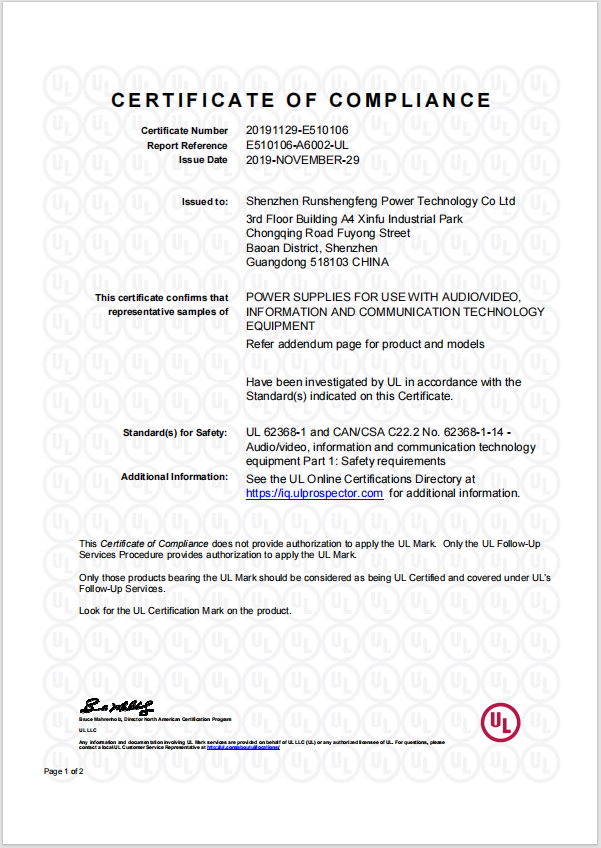
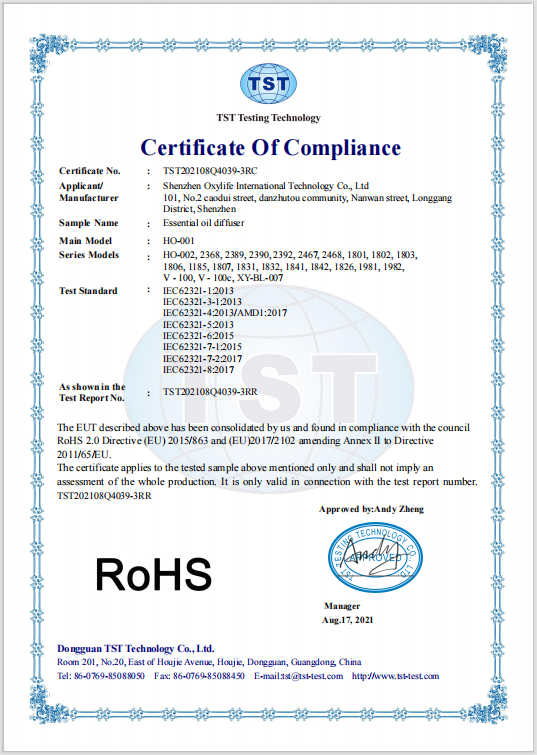
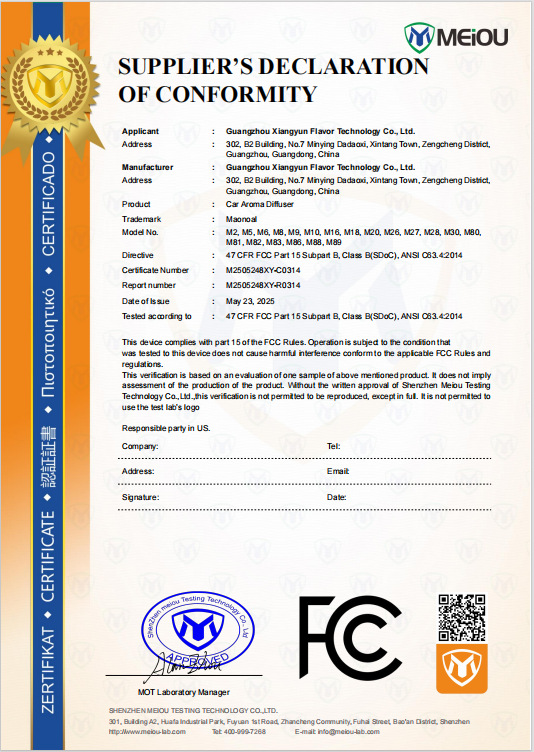
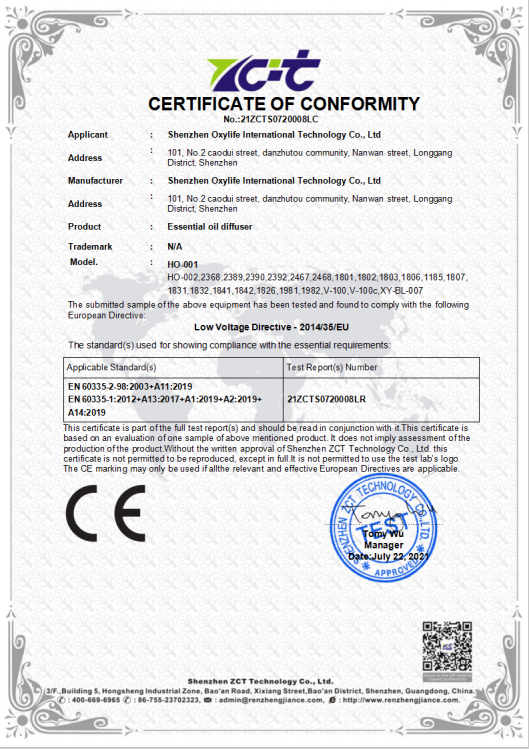
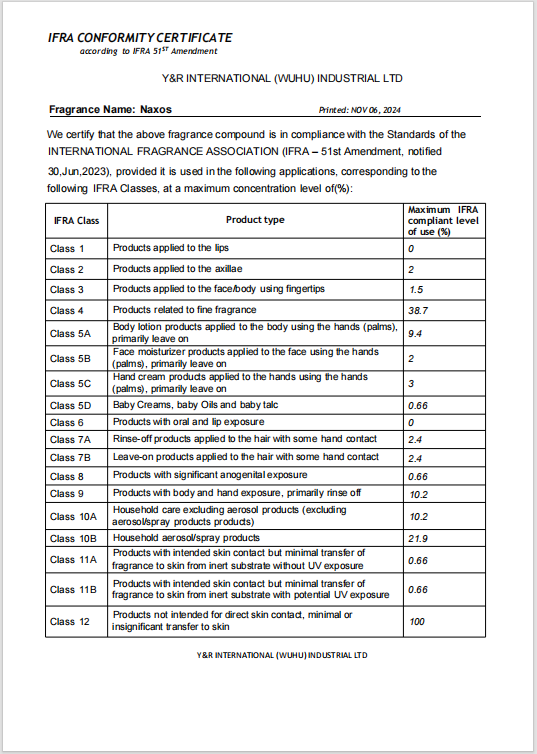
Global importers must prepare region-specific mandatory certifications. For EU and US markets, full certifications including CE (LVD/EMC), RoHS, FCC, and IFRA fragrance compliance reports are compulsory. Smart diffusers with Bluetooth or Wi-Fi functions need additional RED radio certification and mandatory BOB Bluetooth certification, which is legally required for using Bluetooth logos and related naming to avoid infringement issues. Battery-operated diffusers must equip IEC62133 safety reports issued by regular CNAS-qualified laboratories to prevent customs detention. For Mexico market, valid NOM certification is a must for customs clearance.
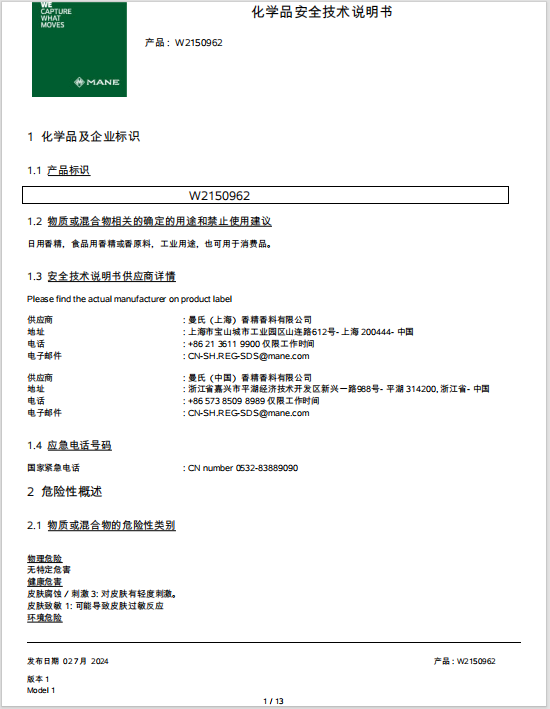
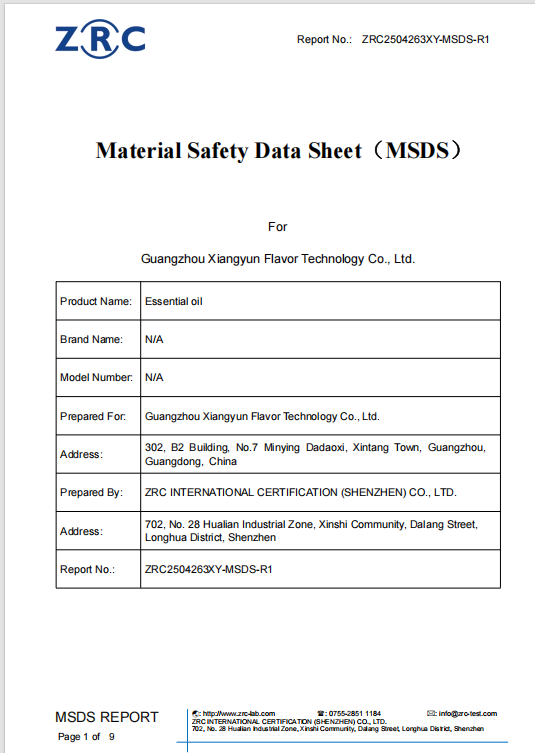
Accurate commodity classification is critical for stable import. The official HS code for electric aroma diffusers is 8509.80. Precise HS code classification avoids incorrect tax rates and random customs inspections. For all diffuser shipments containing essential oil liquids, a complete 16-section bilingual MSDS certificate is mandatory to prove non-dangerous goods status.
For buyer qualifications, small startup businesses without official import licenses can complete imports via professional freight forwarders, with no need for independent trade qualifications. Note that individual or virtual companies without physical business entities are not allowed to clear customs in certain countries, especially Brazil.
Section 2: Supplier Confirmation & Order Placement Rules
Selecting reliable essential oil diffuser suppliers directly determines the smoothness of your import business and reduces potential after-sales risks. This section matches the five business models mentioned in Chapter 1, with standardized and differentiated ordering rules for different procurement modes.
For the dropshipping model, qualified suppliers provide one-stop packaging and small parcel shipping services. Buyers do not need to prepare clearance documents personally. This mode features simple operation but higher shipping costs and long transit time, with an average delivery period of 7 to 15 days.
For small-batch wholesale procurement, mixed-style orders are fully supported. Professional manufacturers provide unified packing lists, commercial invoices, and a complete set of customs clearance documents to streamline your import process.
For custom mold development projects, strictly verify prototype performance, mold test reports, and pre-production sample quality before mass production. This step effectively avoids large-scale defective batches and reduces custom development losses.
A core benefit of cooperating with formal essential oil diffuser manufacturers is free professional compliance document support, covering all certification and clearance files required for global market access.
Section 3: Production Inspection & Pre-Shipment Verification
Essential oil diffusers have strict functional and safety standards compared with ordinary commodities. Comprehensive pre-shipment inspection is essential to minimize after-sales problems and customer complaints.
Functional inspection covers core product performance: stable atomization effect, long battery standby time, sensitive touch and hidden button response, zero liquid leakage, and no abnormal operating noise.
Safety inspection focuses on electrical safety and material compliance. Qualified diffusers must be equipped with complete circuit protection and overcharge protection systems, adopting standard flame-retardant materials that fully meet EU and US household electrical safety regulations.
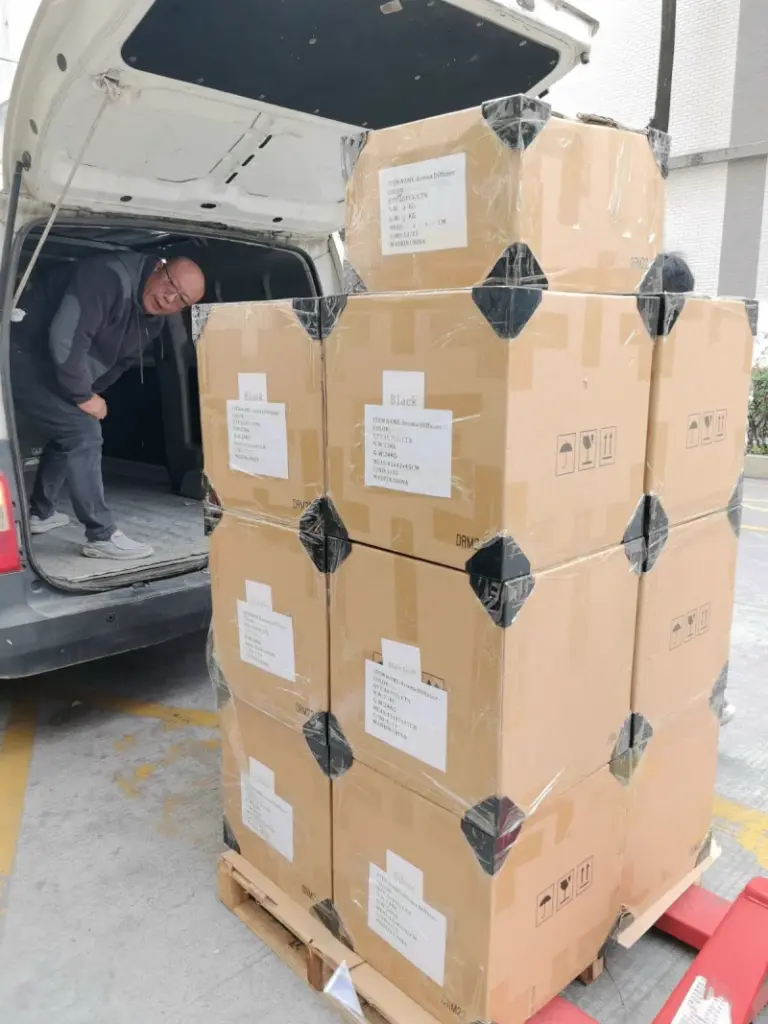
Standardized packaging ensures long-distance transportation safety. Each diffuser is packed with anti-collision foam inner padding and neutral export cartons, meeting professional sea and air freight compression resistance standards. All products pass strict drop tests before shipment. Buyers can request outer carton corner protection for extra safety, with complete and standard shipping marks pasted on all outer packages, controlling the overall product damage rate below 0.5%.
Section 4: Complete Customs Clearance Document Package
This is the most practical and valuable part of the import guide, summarizing the standard universal document package for aroma diffuser imports, applicable to Europe, America, Southeast Asia and most global regions.
Mandatory clearance documents include commercial invoice, packing list, sales contract, bill of lading or air waybill, bilingual MSDS certificate, and official product certification reports.
Additionally, qualified aroma diffuser suppliers can assist in applying for the Certificate of Origin. This official document helps ASEAN buyers deduct partial import tariffs, effectively reducing overall procurement costs.
Section 5: Shipping Mode Selection & Cost Matching (Link to Chapter 1 Budget)
We match the most cost-effective logistics solutions based on the five budget procurement models introduced in Chapter 1, covering startup, wholesale, custom and commercial project orders.
$100 dropshipping startup: Adopt China Post e-packet or AliExpress standard shipping, perfectly suitable for small-quantity single orders with low startup budgets.
$2,000 small-batch wholesale: Choose LCL sea freight (less than container load). The average shipping rate to EU and US destinations is around $1 per kilogram, offering the lowest long-term logistics cost for small-batch importers.
Urgent replenishment orders: Air freight is the priority option. It features fast delivery speed with an average rate of $10 per kilogram, ideal for seasonal sales peaks and rapid market verification tests.
Commercial bulk project orders: Full-container sea freight is recommended, with the lowest unit freight cost and stable delivery cycles for large-scale procurement.
No suitable freight forwarder? We work with long-term partners who specialize in shipping diffusers containing batteries or essential oils; they can assist you with the entire shipping and customs clearance process.
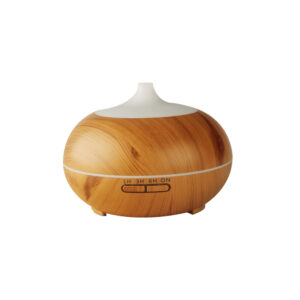
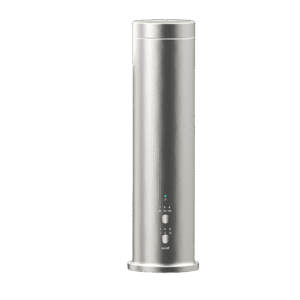
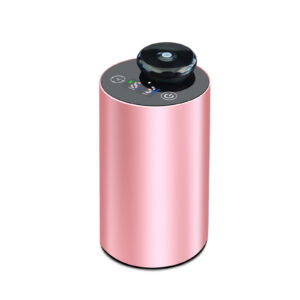
You can visit the “Wholesale Diffusers from China” page to select the diffusers you prefer.
Section 6: Customs Declaration, Tax Payment & Goods Pickup
We simplify professional trade procedures into beginner-friendly steps, eliminating complicated jargon and helping new importers complete customs clearance smoothly.
First, professional freight forwarders conduct electronic pre-declaration with complete document sets. Next, customs authorities carry out document review and random spot checks, mainly verifying product consistency and fragrance ingredient safety. After review and inspection pass, buyers pay corresponding import tariffs and VAT. Aroma diffuser tariff rates are stable and transparent across global regions:
- United States: CIF Price x 4.2%
- Canada: CIF Price x 8%
- Mexico: CIF Price x 25%
- Brazil: CIF Price x 18%
- European Union: CIF Price x2.2%
- GCC (Gulf Cooperation Council): CIF Price x 5%
- South Africa: FOB Price x20%
After inspection approval, buyers pay the corresponding DUTY and VAT before customs goods release.
Section 7: Post-Import After-Sales & Long-Term Cooperation Tips
Reasonable after-sales preparation and long-term cooperation planning can greatly reduce your business risks and improve operational stability.
For all bulk orders, reserve 1% to 2% of finished diffuser units specially for after-sales replacement. Meanwhile, prepare 2% of core spare parts including air pumps, cooling fans and mainboards to handle daily product maintenance and failures quickly.
Before formal cooperation, confirm detailed after-sales service terms with your aroma diffuser supplier in advance, clarifying warranty scope, repair cycle, replacement rules and after-sales support standards to avoid subsequent cooperation disputes.




 English
  Spanish