


Can you use fragrance oil in a diffuser — your own or a third party’s? Yes, in most cases, and whether it works safely is decided by one thing: the atomizing technology inside the machine. Cold-air nebulizing units run pure natural essential oils of normal viscosity without issues. In fact, every model we ship must first atomize high-viscosity grape-seed oil in production tests. Ceramic-piezo ultrasonic units turn oil and water into mist together. Stainless-steel micro-mesh units need water-based oil. UHF units above 3 MHz take either water- or oil-based liquids below 45 cP / 45 mPa·s. Heat-based units need heat-stable oils. So skip the spec-sheet detective work. Tell us your model, and we supply an oil formulated for that exact mechanism. For anything unusual, one sample run on the real machine settles the question for good.
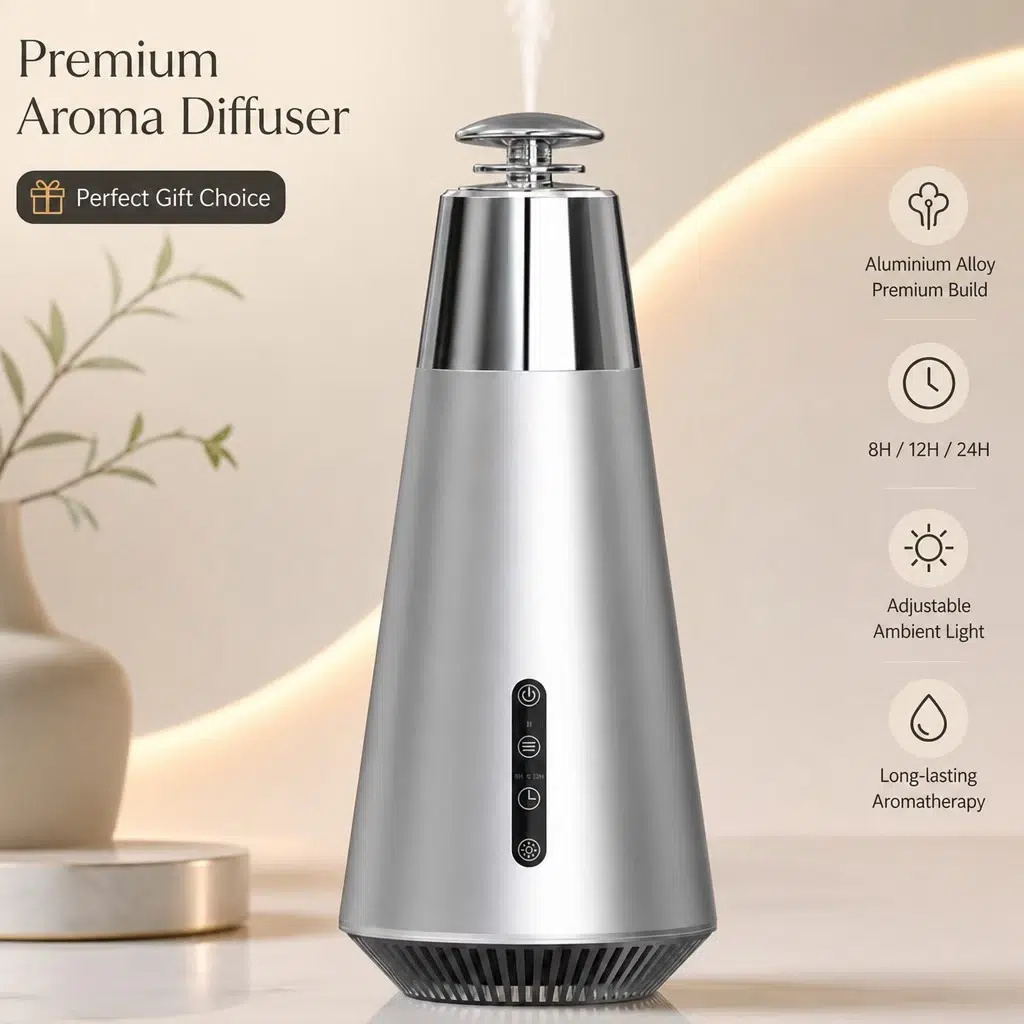
Who this guide is for — and how we help
This guide fits three buyers. First, brand owners who already hold a signature fragrance and want to keep their own oil supplier. Second, importers who worry about clogging and want certainty before a bulk order. Third, first-time buyers who simply want the right oil for the machine they just chose.
Here is how we cut the work for all three. We build the machines, and we formulate the oils, so every technology already has a matching formula. You do not need to collect viscosity, density or flash-point figures from your fragrance house. That paperwork creates questions, yet it moves no order forward. Instead, send one sentence: “I am using model X.” We then ship an oil that runs cleanly in that machine type. If you already own an oil or a full fragrance formula, we test it for you — the sample section below shows how.
Which diffuser types take your own fragrance oil?
Most clogging and scorching complaints trace back to one mistake: treating different mechanisms as the same machine. So start from the mechanism, not the label. The table below matches each one to the oil it needs.
| Mechanism | How it works | Oil to use |
|---|---|---|
| Ceramic piezo disc (ultrasonic) | Vibrates the reservoir; water and oil atomize together | Pure or fragrance oil with water, or water-based |
| Stainless-steel micro-mesh (micropore) | Pushes liquid through thousands of tiny holes; the holes fear oily residue | Water-soluble / water-based oil |
| UHF (ultra-high-frequency) | Drives liquid above 3 MHz; atomizes essential oil directly, no water | Water- or oil-based, below 45 cP / 45 mPa·s |
| Heat-based (vaporizing) | A heating element evaporates the oil, like an e-cigarette | Heat-stable oils only (candle-type) |
Deciding between these technologies for your space? Read how to choose a diffuser — three decisions: space, oil, install and control.
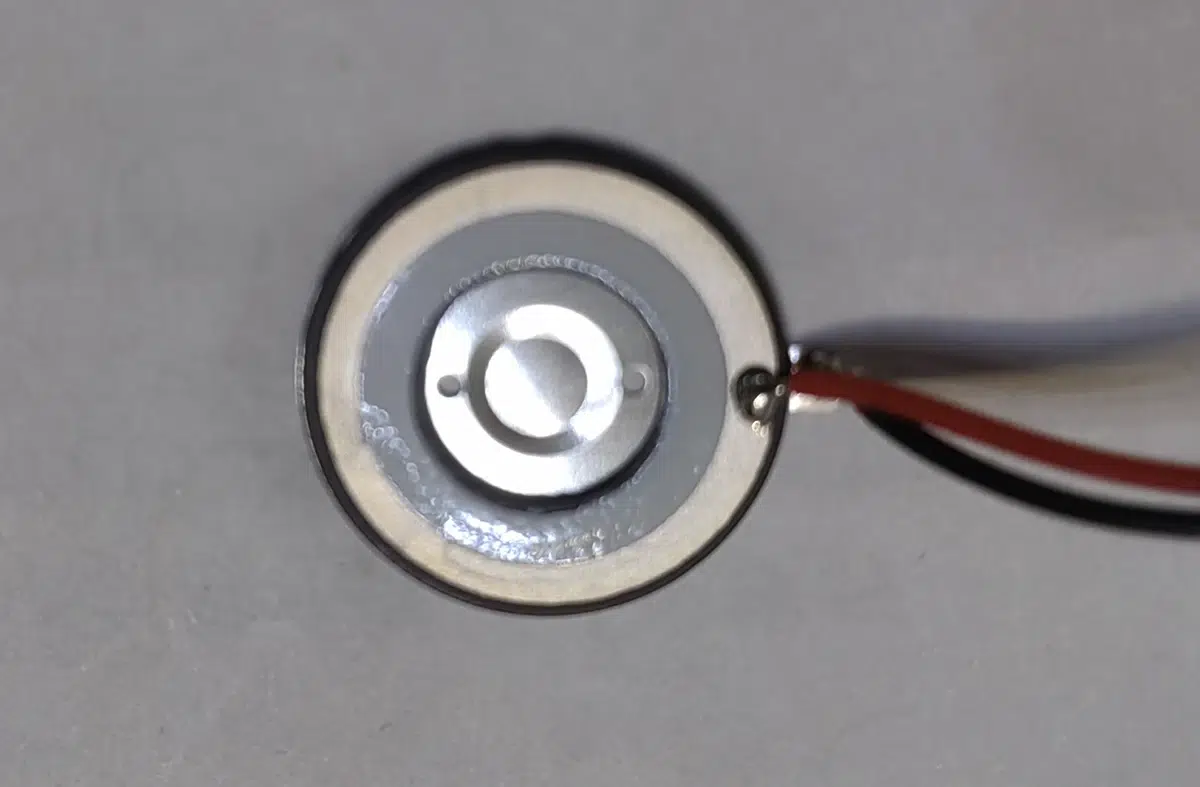
Ceramic piezo discs: oil and water atomize together
A ceramic disc vibrates the reservoir, so water and oil turn into mist together. A thin oil film on the water is normal. That film does not stop atomization, and the ceramic disc does not clog from it. Therefore, you can run pure or fragrance oil with water in this type. See the ultrasonic range.

Stainless-steel micro-mesh: water-based oil only
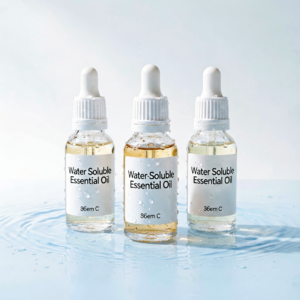
A micro-mesh (micropore) unit pushes liquid through thousands of tiny steel holes. Those fine apertures catch oily residue, so they can block. Use water-soluble oil here. However, the “water-based” label alone is no guarantee — formulations differ, and some formulas still slowly block the holes. That is why we confirm the specific oil with a real test run, rather than sell “any water-based oil”. Browse the micro-mesh range and water-soluble oils.
UHF: oil or water-based, below 45 cP
A UHF unit drives the liquid at frequencies above 3 MHz and atomizes essential oil directly, with no water added. Both water-based and oil-based liquids work. Our working guidance: a viscosity below 45 cP / 45 mPa·s. Note the limit carefully — 45 cP is the standard for UHF machines, not for other diffuser types. See the UHF range.
Heat-based (vaporizing): heat-stable oils only
A heat-based unit works the same way as an e-cigarette: a heating element evaporates the oil. So the oil must stay stable and true to scent under heat. Candle-type fragrance oils carry that property by design. Whether a given blend scorches or throws off-notes, we settle by adjusting and testing the formula — never by reading a label.
Cold-air and nebulizing diffusers: the pure-oil rules
If you want to use your own fragrance oil in a diffuser of the cold-air type, three rules cover almost everything.
Rule 1 — Normal-viscosity pure oils run without issues
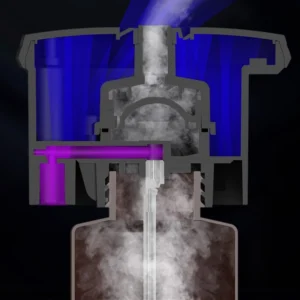
Cold-air (waterless) units atomize pure oil directly with an air pump — no water, no heat. For that reason, pure natural essential oils of normal viscosity run without problems. This covers single oils and standard blends, day in and day out.
Rule 2 — Grape-seed oil proves the tolerance
Every model we sell must pass one production test before it ships: it has to atomize high-viscosity grape-seed oil cleanly. A machine that sprays grape-seed oil handles ordinary fragrance oils comfortably. So a moderately heavy oil is rarely a barrier in practice.
Rule 3 — Congealing is the risk no data sheet shows
However, a passing viscosity is not a passing oil. A resin-rich blend can flow and atomize for minutes, then slowly congeal at the atomizing needle and narrow the spray. No number on a sheet predicts that behaviour — a real run does. So we confirm resinous, heavily compounded or brand-new formulas with a sample test, never with a spec sheet. Our standard waterless and nebulizing oils already pass this screen, which is why machine-plus-oil buyers rarely see a clog.
How we confirm compatibility: the sample is the test
Skip the back-and-forth of technical questions. Instead, take the step that settles everything.
- Test it yourself. Order the diffuser sample — with a matched oil, or with your own oil — through the sample request form, and run it in your own space.
- Or let us check it. Send us your oil or concentrate. We run it on the target model and report the spray, the residue and the long-run behaviour.
In the normal case, this step is a formality, because we formulate each machine type’s oil for its mechanism. The sample simply gives you proof before a bulk order. The same “send your concentrate, we validate it” path also powers our OEM and ODM projects. One note on documents: for regulated markets we align oil paperwork (SDS, IFRA, allergen) with your order once it is under way — we do not hand documents out free at the inquiry stage.
Common mistakes that cause clogging
- Judging by the label, not the mechanism. “Ultrasonic” covers ceramic discs and steel meshes, and they take different oils.
- Trusting a viscosity number. Oils pass viscosity checks every day and still congeal on the needle. Only a run reveals it.
- Pouring pure oil into a micro-mesh unit. The fine holes block. Water-based oil belongs there.
- Skipping the sample for an unusual formula. Resin-rich or brand-new blends deserve one test run before you order in volume.
Frequently Asked Questions
Q1: Can I use my own or a third-party fragrance oil in your diffusers?
Yes in most cases. You do not need to submit technical specs — just tell us which model or technology (cold-air, ceramic ultrasonic, micro-mesh, UHF or heat-based) you use, and we confirm which oil type it takes. If you already have your own oil, the reliable way to confirm is a sample run on that machine, which you can do yourself or ask us to do for you.
Q2: Do pure essential oils work in cold-air nebulizing diffusers?
Pure natural essential oils of normal viscosity run without issues in cold-air nebulizing units. We production-test every model by atomizing high-viscosity grape-seed oil, so the mechanism tolerates a wide viscosity range. But a passing viscosity is not the whole test — some resin-rich or congealing blends can still slowly deposit at the atomizing needle — so unusual formulas are confirmed with a real sample run, not by reading a number.
Q3: Can ultrasonic diffusers atomize fragrance oil, or only water-based oil?
It depends on the atomizer. A ceramic piezo disc atomizes water and oil together — an oil film is normal and does not block it. Only the stainless-steel micro-mesh (micropore) type needs water-based oil, because its tiny holes are sensitive to oily residue. Note that not every water-based formula is automatically safe either — formulations differ, so we confirm the specific oil for a mesh model by test. If you are not sure which mechanism your unit uses, send us the model and we will tell you.
Q4: What oil does a UHF diffuser take?
UHF (ultra-high-frequency) units vibrate above 3 MHz and atomize essential oil directly, with no water needed. Both water-based and oil-based liquids work; the working guidance is a viscosity below 45 cP / 45 mPa·s. Note this figure is the standard for UHF machines specifically — it does not carry over to other diffuser types, which we match and confirm by sample runs instead.
Q5: What about heat-based (vaporizing) diffusers — any oil restrictions?
Heat-based units work like an e-cigarette: a heating element evaporates the oil, so the oil must stay stable and true to scent under heat. Candle-type fragrance oils have this property by design. Whether a specific formula suits the machine — any scorching or off-notes under heating — is settled by adjusting and testing the formula, so we validate the blend on the actual unit rather than judging from a label.
Q6: Do I need to send viscosity, density or flash-point figures?
No. Those numbers are not something you need to gather, and no single viscosity limit applies across every diffuser type — the only hard figure we use is the below-45 cP guidance on UHF machines, and even a passing viscosity cannot predict congealing at the atomizing needle. Formulating and validating the oil for the mechanism is our job: tell us the model and we provide a compatible formula, confirmed by a real run for specialised cases.
Q7: How do I make sure my oil will not clog the diffuser?
The surest method is a sample: run the oil in the actual model over a normal operating cycle and watch the spray and the atomizing needle. The oils we supply are already matched to each machine type and run without clogging in normal use, so customers who take machine and oil together rarely need anything further. If you use your own oil and want certainty, order a sample or send it to us to test.
Q8: Will using my own oil void the warranty?
Using a compatible oil — including the matched oil we supply for the model — does not affect the warranty. We treat blocking, pump damage or scorching caused by an unsuitable oil (for example a congealing resin blend at a fine needle, an oily formula in a micro-mesh unit, or a non-heat-stable oil in a vaporizing unit) as an oil issue rather than a machine defect. Matching the oil to the mechanism keeps you covered; see the after-sales policy.
Q9: Can you provide SDS, IFRA or other oil documents before I order?
We prepare oil documentation and certificates for confirmed partners and provide them once your order is under way, rather than distributing them freely at the inquiry stage. Tell us the products and destination market, and we include the relevant documents with your order. Sample and compatibility testing can proceed in the meantime, so the schedule is not held up.


 English
 Spanish