


Knowing how to choose a diffuser is really three decisions in order: the space, the oil technology, then the installation and control — and you should answer them twice, as a user picking for a room and as a business picking what will sell. Right now the best-selling shape is a small portable waterless unit with up to a 20 ml / 0.68 fl oz bottle, covering roughly 80 m² / 861 sq ft. The second strongest is the tower-style desktop or floor-standing unit around 100 m² / 1076 sq ft. Cold-air types run pure oil; ceramic-piezo ultrasonic types turn oil and water into mist together; micro-mesh types need water-based oil; UHF types above 3 MHz atomize oil directly; heat-based types need heat-stable oils. We match the oil to whichever model you pick — see the oil compatibility guide. Building a brand? Price retail at least 5× your EXW cost, so taxes, ads and after-sales still leave margin.
Short on time? Our wholesale diffuser machine catalog lists all 49 machines by type, so you can jump straight from decision to shortlist.

Who this guide is for
Three readers land here. First, own-use buyers who just want the right machine for one room or a car. Second, resellers and importers who need stock that turns over — they care about best-seller sizes and price multiples. Third, brand builders hunting a low-MOQ custom range with real margin. The steps below serve all three, because the same three decisions — space, technology, control — apply at every scale. Along the way, each section links to the exact wholesale range it describes.
Step 1 – Start with the space, not the model
Coverage follows room volume and airflow, so begin there rather than with a model number you saw online. Sort your case into one of four buckets: a single room at home, a commercial space people walk through (store, spa, hotel lobby), a vehicle cabin, or a large ducted space served by HVAC.
Where demand concentrates now
If you are choosing stock rather than one personal unit, the market is telling you something:
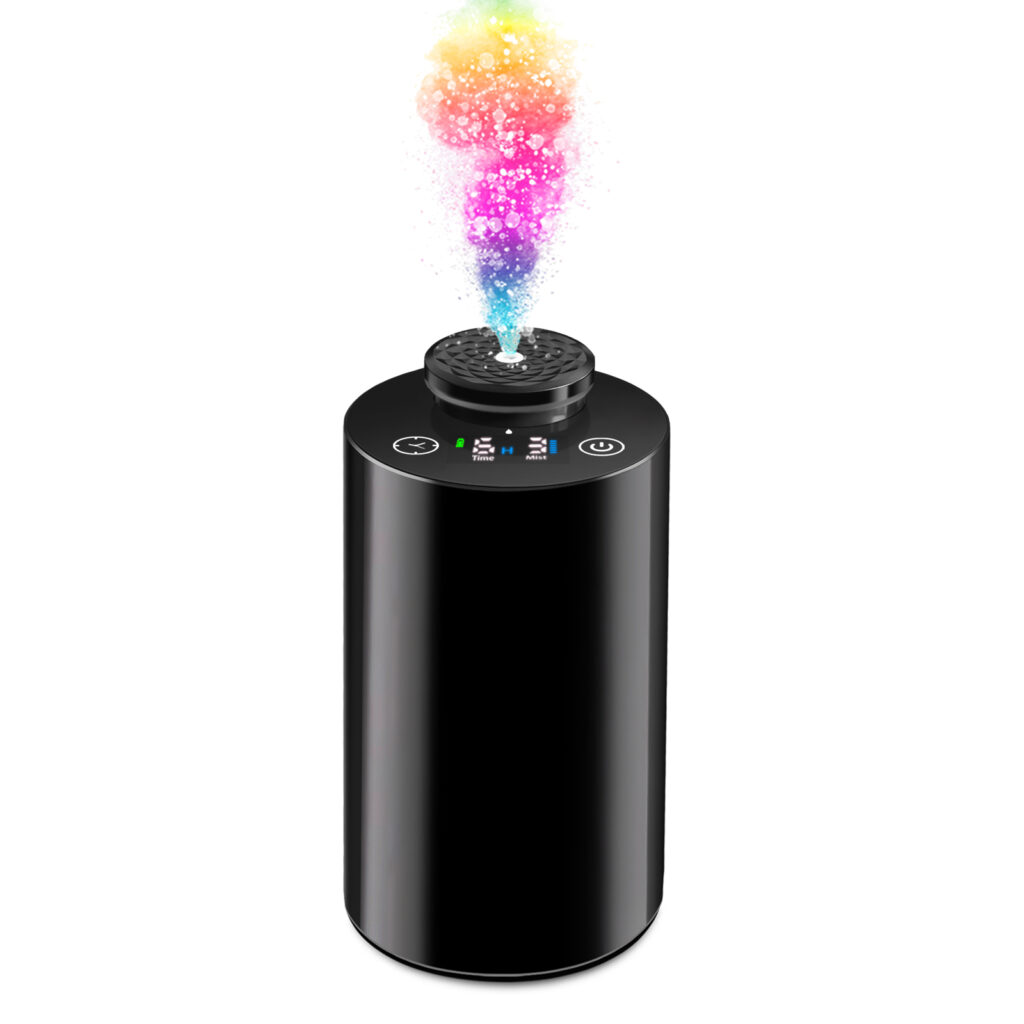
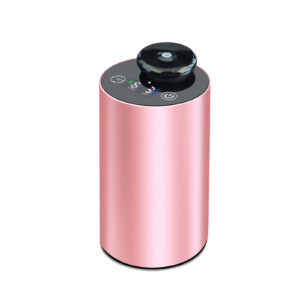
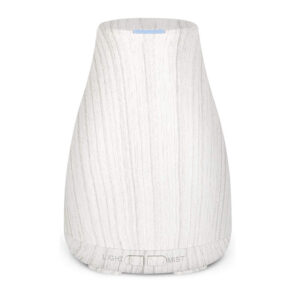
- Small portable waterless diffusers — the best-sellers. Compact, bottle up to about 20 ml / 0.68 fl oz, sized for rooms around 80 m² / 861 sq ft. They suit bedrooms, offices and gifting, and they turn over fastest.
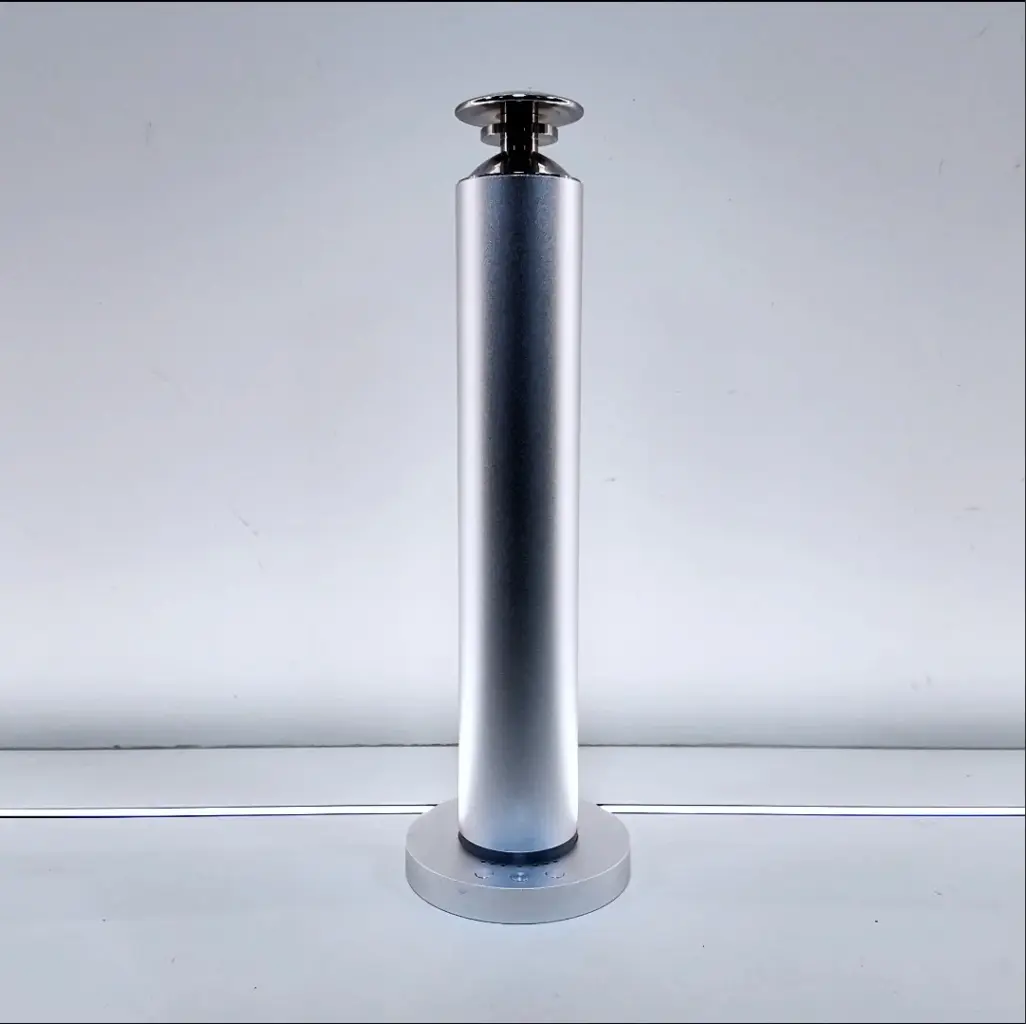
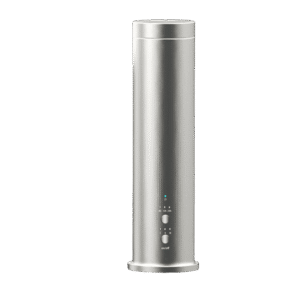
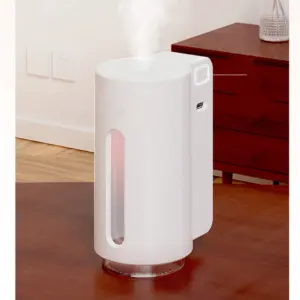
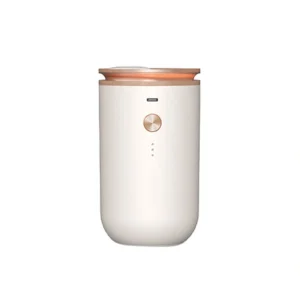
- Tower desktop / floor-standing units — the second tier. A taller tower form covering around 100 m² / 1076 sq ft, popular for living rooms, receptions and small commercial spaces.
- Everything else. Wall-mounted, in-car, ceramic and glass decorative units, large commercial machines, HVAC — these fill specific niches rather than the volume middle.
Do not take a coverage number from a category label. Instead, state the dimensions and the ceiling height, and we size it — under- or over-buying both cost you money.
Step 2 – Compare aroma diffuser types by technology
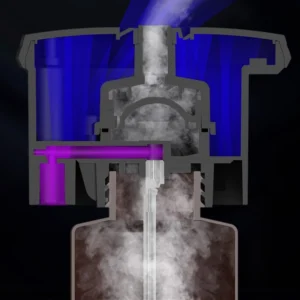
- Cold-air / nebulizing (waterless) atomizes pure oil directly — no water, strong dry scent throw, the widest oil choice. It anchors our waterless and nebulizing ranges.
- Ceramic-piezo ultrasonic vibrates the reservoir, so oil and water turn into mist together; the normal oil film does not clog the disc.
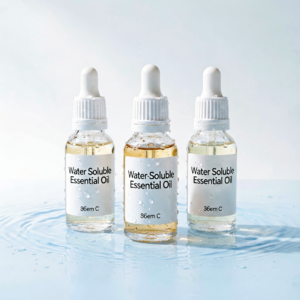
- Micro-mesh (micropore) ultrasonic pushes liquid through thousands of tiny steel holes — the one ultrasonic type that needs water-based oil, because the apertures clog. See the micro-mesh and water-soluble oil ranges.
- UHF (ultra-high-frequency) drives liquid above 3 MHz and atomizes essential oil directly — water- or oil-based both work below 45 cP / 45 mPa·s. See the UHF range.
- Heat-based (vaporizing) evaporates oil with a heating element, the same principle as an e-cigarette. It requires heat-stable oils, and we test formulas for scorching before volume.
- HVAC-connected injects scent into ducted airflow for whole-zone coverage.
For a deeper side-by-side on cost, margins and after-sales, see waterless vs ultrasonic diffusers: which should you wholesale in 2026.
The oil you already use can decide this step for you. The full mechanism-by-mechanism oil rules live in the fragrance-oil compatibility guide. For a complete map of every category on the market, read the Chapter 3 types guide.
Step 3 – Choose a diffuser by form factor
| Form factor | Typical setting | Range |
|---|---|---|
| Portable / desktop | Home, office, gifting (the best-selling size) | Waterless · Portable · Ultrasonic |
| Tower / floor-standing | Living room, reception, small commercial | Nebulizing · Commercial |
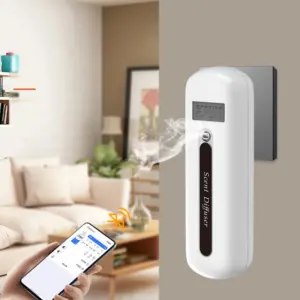
| Wall-mounted | Permanent retail and corridor installs | Wall-mounted |
| In-car | Cabin, heat-tolerant build | Car diffusers |
| HVAC / ducted | Whole-floor and multi-room venues | HVAC |
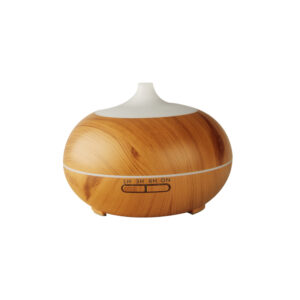
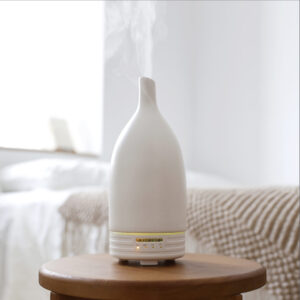
| Decorative, material-led | Boutique, gifting, premium shelf | Metal/alloy · Ceramic |
Step 4 – Control and power
The lowest-cost option is a basic model without app connectivity: you switch it on, set the mist level and any timers with the buttons on the machine itself. A Bluetooth model adds scheduling from your phone when you stand near the unit. A Wi-Fi model adds remote control and multi-unit management across locations — that is what chain stores and hotels use to run scent programs centrally. See the smart range. On power, plug-in units run at full output indefinitely, while battery / USB-C portables trade some capacity for mobility. Connectivity and battery figures are model-specific, so check each product page.
Think like a brand: will the margin be there?
If you resell rather than use the units yourself, coverage is only half the choice. The other half: does the product support a profitable price?
- Brands (DTC site, own store, curated retail): price retail at least 5× the EXW price you pay. Duties, ads, channel fees and after-sales have to leave roughly 30% net margin. Otherwise inventory quietly eats the profit. A product that only allows 3× rarely works as a branded item.
- Marketplaces and supermarkets: ordinary models usually cap around 3× over EXW. Volume is higher, but prices are transparent, so a standard unit cannot carry brand-level margin. A genuinely distinctive custom model is the exception.
- Price-sensitive (“down-market”) countries flip the picture. Ordinary models can still reach 5× over EXW there, because local retail prices and channel costs differ. The same portable or tower that gets squeezed in a mature Western marketplace stays profitable in these markets.
The custom ladder worth climbing
The current trend for brands is small-batch customization around the two proven sizes, rather than another generic plastic unit.
Tier 1 – CNC full-aluminium waterless diffusers
CNC tooling opens relatively cheap, MOQs stay low, and the premium metal finish supports a high unit price with a 5×+ multiple. Our machined-alloy examples: the A6000 2026 commercial waterless diffuser, the aluminium-alloy M202B and MA202. Custom options live on the OEM/ODM page.

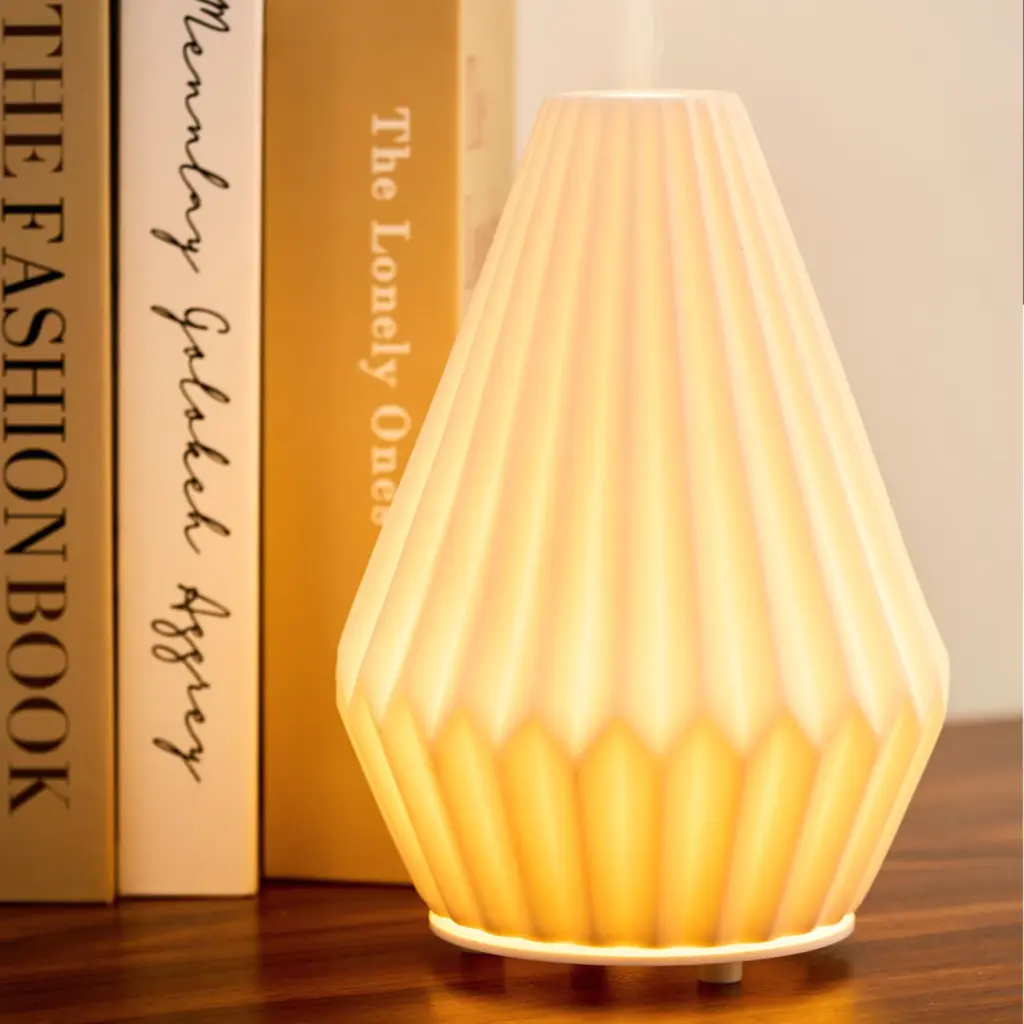
Tier 2 – Custom ceramic and glass waterless diffusers
Mid-range tooling cost, low MOQ, strong shelf appeal for boutique and gifting brands — also capable of 5×+. Start on the custom ceramic/stone page.
Tier 3 – Custom scents and oil subscriptions
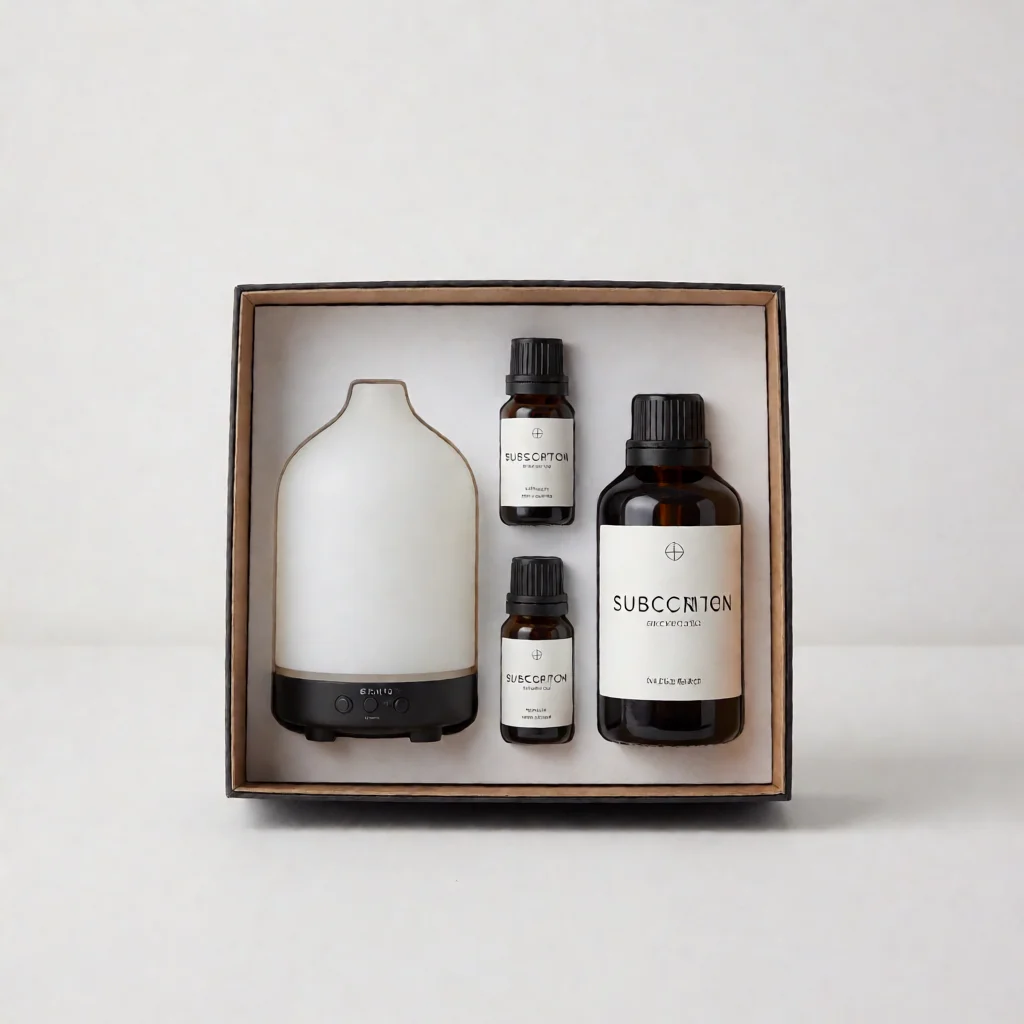
Hardware opens the account; recurring oil refills carry the steadier margin. Bundle a device with cartridges or a refill subscription. Tooling investment runs higher here and MOQs are negotiable — see the wholesale oil program.
Tier 4 – Design-led, emotion-first branding
The highest tier sells an emotional value or a designed object, not a spec sheet. It is the most defensible play, but it needs real design input. Our industrial design partner page covers that route.
The first-batch rule: where the profit really starts
Every custom project shares one truth: the first trial batch is not where you make money. Development, engineering and mold costs sit on that first run, so it normally breaks even at best. Profit arrives on the first large reorder after validation — once unit cost compresses and your marketing channel proves itself. Plan cash flow for that sequence, and do not expect margin on batch one.
Routing table: from situation to range
| Your situation | What to look at |
|---|---|
| Best-selling portable for a room up to ~80 m² / 861 sq ft | Waterless range · Portable |
| Tower for ~100 m² / 1076 sq ft living room / reception | Nebulizing · Commercial top-5 |
| Home/desktop, water mist, entry budget | Ultrasonic range |
| Direct oil atomization, no water, high frequency | UHF range |
| Store, spa or hotel scenting | Commercial range · Wall-mounted |
| Whole floor / ducted building | HVAC range (integration on request) |
| Brand launch, low-MOQ premium custom | A6000 waterless · CNC alloy · Ceramic/glass · OEM/ODM |
| New to the category | Chapter 3 types guide · Waterless suppliers |
| Car cabin | Best car diffusers · Car range |
Common selection mistakes
- Choosing on unit price alone. A cheap device that only supports a 3× resale multiple becomes the most expensive item in a brand line once ad spend and returns are counted.
- Matching the wrong oil to the mechanism. Pure oily formula in a micro-mesh unit, a non-heat-stable oil in a vaporizing unit — or assuming all ultrasonic machines are the same. Ceramic piezo, steel mesh and UHF are different machines.
- Expecting profit on the first custom batch. Tooling and development make batch one a validation step; the reorder is the profit.
- Putting a domestic unit in a car. Parked-cabin heat far exceeds room temperature, so use a purpose-built car unit.
- Assuming one unit crosses closed doors. Scent does not pass through closed doors, so separate rooms need separate units or HVAC.
Frequently Asked Questions
Q1: Which diffuser type sells best at the moment?
The strongest seller is a compact portable waterless unit with a bottle up to about 20 ml / 0.68 fl oz, sized for rooms around 80 m² / 861 sq ft, used in bedrooms, offices and gifting. The second strongest is the tower-style desktop or floor-standing unit around 100 m² / 1076 sq ft for living rooms and receptions. Wall-mounted, in-car, ceramic/glass and large commercial formats serve specific niches after those two.
Q2: Which diffuser type is best for home use?
For a single bedroom or office, most buyers choose a portable cold-air waterless unit in the best-selling ~80 m² / 861 sq ft size; for a larger living room or reception, a tower around 100 m² / 1076 sq ft. Choose cold-air for pure oil and strong dry scent, or ceramic-piezo ultrasonic if you prefer a water-and-oil mist at a lower price.
Q3: What retail price multiple does a diffuser brand need?
As a rule of thumb, a branded product needs retail pricing of at least 5× the EXW price you pay, because duties, advertising, channel fees and after-sales have to leave around 30% net margin. On marketplaces and in supermarkets an undifferentiated standard model is usually capped near 3× over EXW; in price-sensitive markets the same standard unit can still reach 5× because local price levels differ.
Q4: Which custom diffuser is best for a small-batch brand launch?
The current recommendation is a CNC full-aluminium waterless unit: tooling is cheap to open, MOQ is low, and the metal finish supports a high price and 5×+ margin — for example the A6000 commercial waterless model or the aluminium-alloy M202B. Custom ceramic or glass waterless units are the next route — mid-range tooling, low MOQ, strong gifting appeal. Both beat launching another generic plastic device.
Q5: Do we make money on the first custom order?
Normally no, and you should expect that. The first trial batch carries the development, engineering and mold costs, so it is a validation step at best. The profit comes on the first volume reorder after the product and marketing are proven, when the unit cost comes down and the channel is converting. Budget cash flow for that sequence.
Q6: What is the practical difference between nebulizing, ultrasonic, UHF and heat-based types?
Nebulizing (cold-air, waterless) atomizes pure oil directly for a strong dry scent. Ceramic-piezo ultrasonic atomizes oil and water together and does not clog from the normal oil film; micro-mesh ultrasonic requires water-based oil because its tiny steel holes can block. UHF units vibrate above 3 MHz and atomize oil directly, water- or oil-based below 45 cP / 45 mPa·s. Heat-based units evaporate oil like an e-cigarette and need heat-stable oils. If you already have a signature pure fragrance, cold-air is the safest default.
Q7: Can one unit cover a large or multi-room space, or do I need HVAC?
One high-output unit covers a single open room or lobby, but scent does not pass through closed doors. Separate closed rooms need separate units or a ducted HVAC setup that carries scent through the airflow; for a whole floor or central scheduling, HVAC is the cleaner install. Send the layout and we will advise.
Q8: If I send a photo and room size, can you recommend a model?
Yes, that is the fastest route. Send a photo, the room dimensions and ceiling height, the oil type you prefer, and whether you are buying for own use, resale or a brand launch. We reply with the closest in-stock model, its real coverage, and — for a brand — the custom path and margin logic, with a sample option to verify it before ordering in volume.


 English
 Spanish