


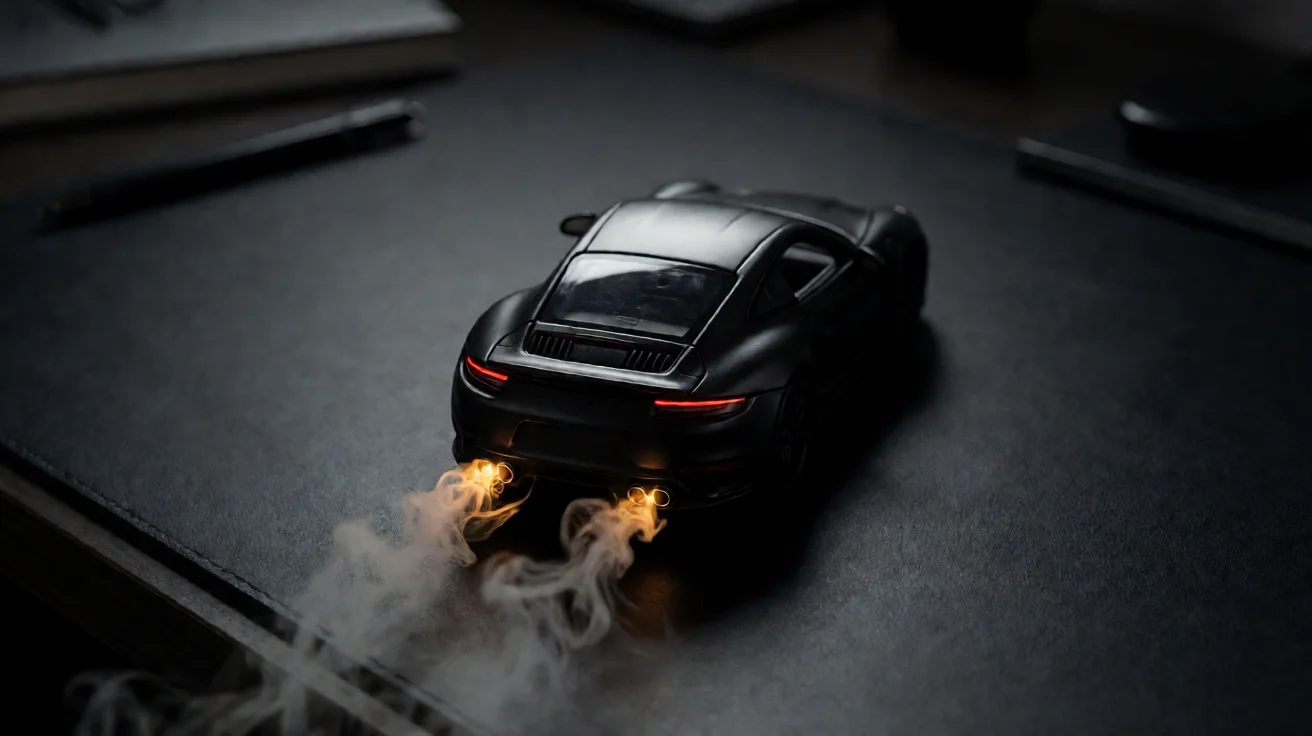
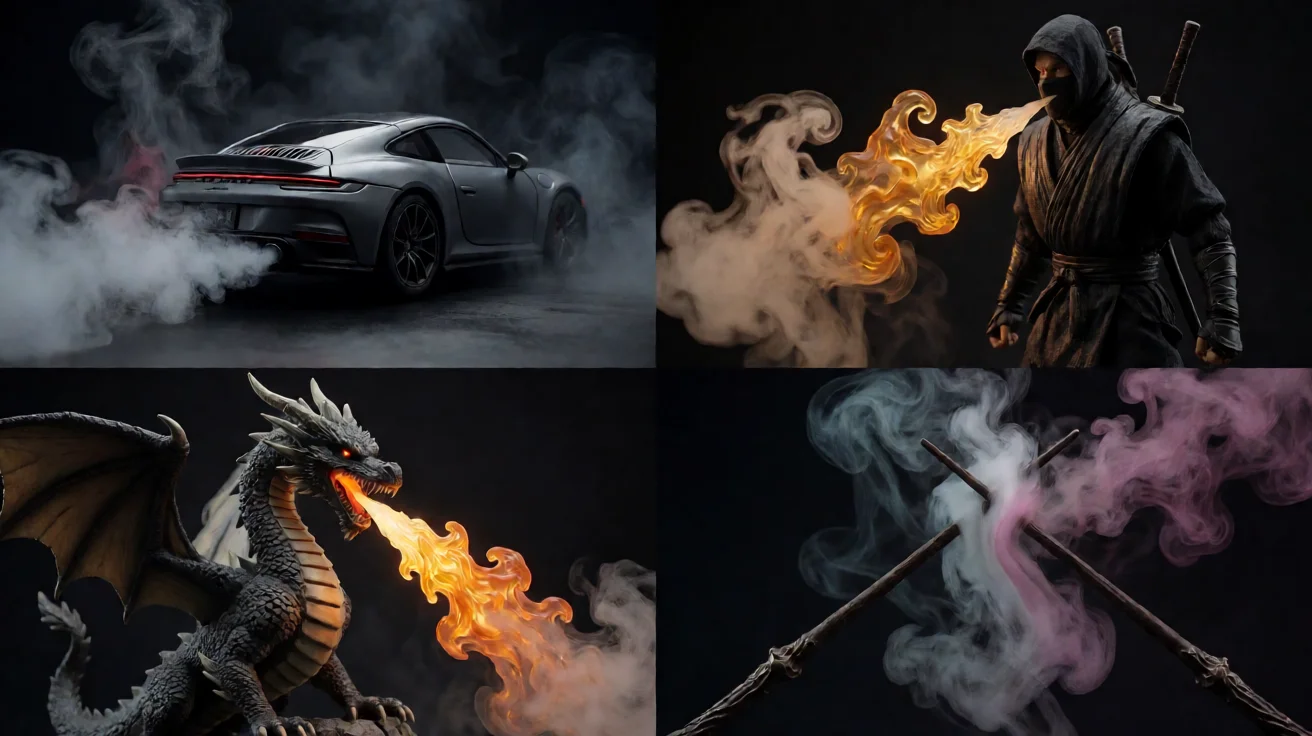
Over the past few months we have received a wave of inquiries built around the same idea: a decorative model whose mist comes out of a place that makes people stop scrolling. A car whose “exhaust” breathes scented vapor. A ninja figure breathing fire mist from the mouth, lit amber so it looks like a flame. A dragon with fire-mist from its jaws. Two wizard wands whose mist streams collide mid-air under different colored lights.
These are not novelty toys with a humidifier glued inside. They are compact, cordless, water-based aroma diffusers whose industrial design, electronics and fluid path are engineered around one visual moment. This guide walks through what is actually involved in developing one, what it costs, and what a serious buyer’s request-for-quotation looks like — based on a real project we are currently quoting.
Why these inquiries are growing
Short-video platforms reward visual novelty. A diffuser that simply glows on a desk does not go viral; a mist plume that looks like a flame does. The result is a new category of buyer brief: the product exists to be filmed, so every design decision — where the mist exits, how fast it appears, whether the surface stays dry on camera — is driven by how it reads on a phone screen.
For importers and brands, this is an opportunity and a trap. The opportunity is a differentiated SKU with strong organic reach. The trap is underestimating the engineering: these are still appliances with water, a battery, and a PCB inside a sealed decorative shell.
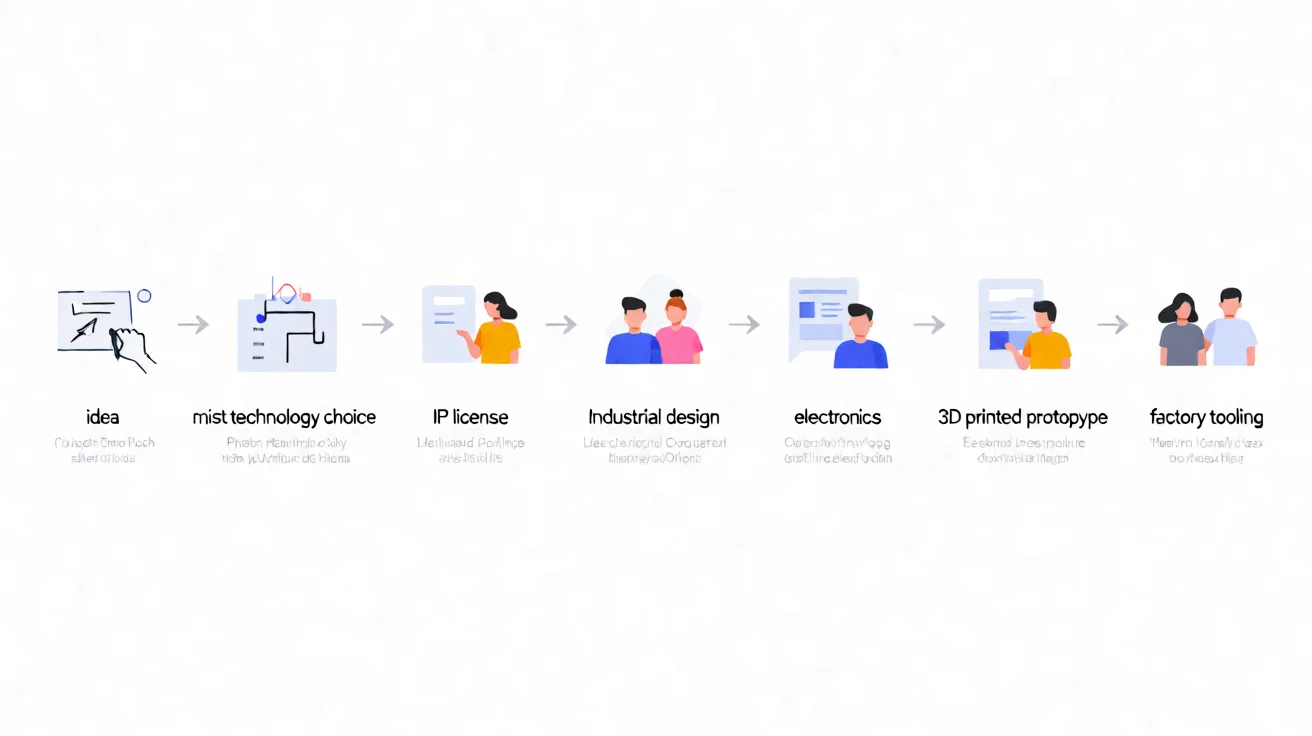
Step 1: Choose the atomization technology
Everything downstream — structure, cost, safety case — follows from this choice.
Ultrasonic atomization (cold mist)
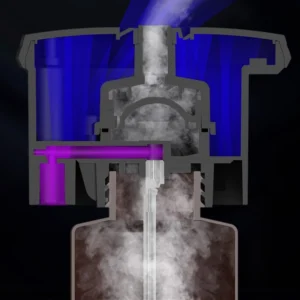
The workhorse of the category, and the right choice for almost every “flame mist” concept. A piezoelectric disc vibrates at ultrasonic frequency and breaks a water–fragrance mixture into a nano-scale cool mist, which a small fan then pushes through the outlet. For a plain-language explanation of the mechanism, see the overview of ultrasonic humidifiers.
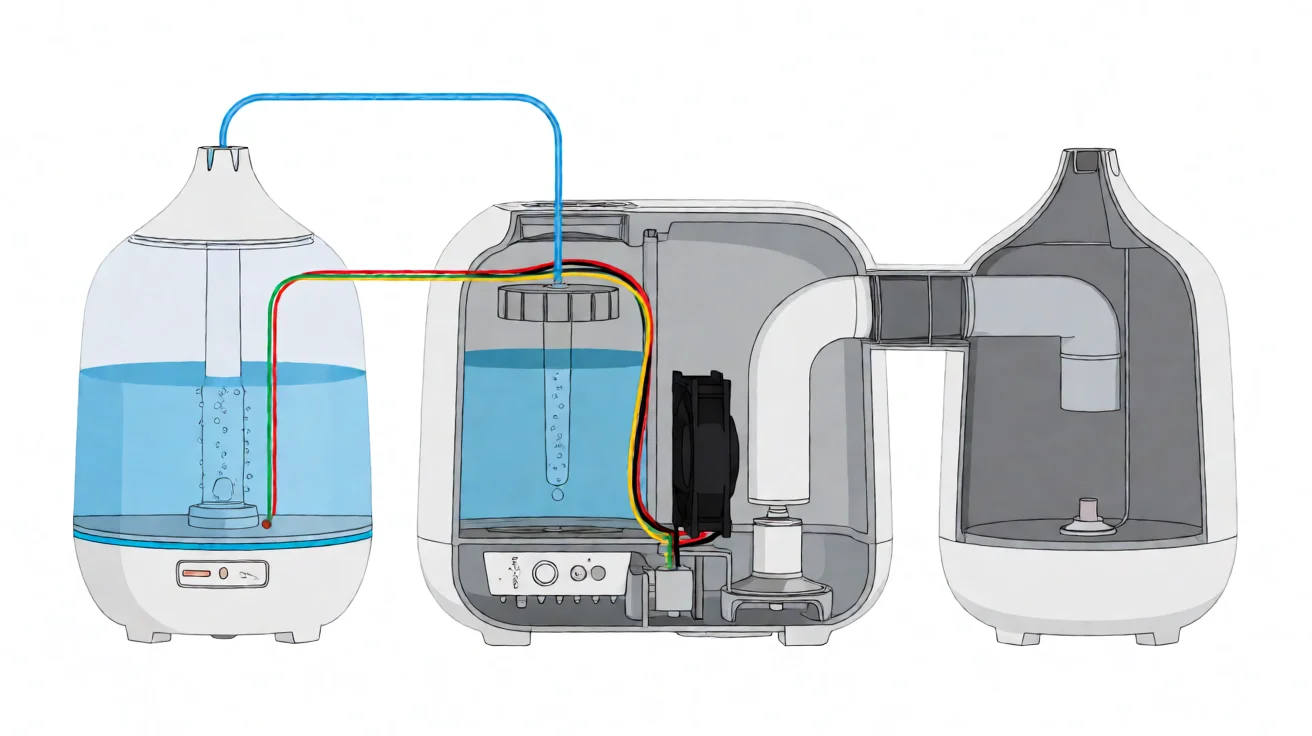
For a novelty ID the structural requirements are non-negotiable:
- Wet/dry separation. The fan, battery and control board must be in a compartment physically isolated from the tank. A single leaked seal will kill the electronics.
- Air path that cannot ingest water. The duct from tank to outlet must be routed so condensate drains back to a sump, not into the fan.
- Removable, cleanable tank. Daily empty-and-dry and a real cleaning cycle are mandatory for any water-based device; see the US EPA guidance on humidifier care.
- Sealed, hidden fill point. The visual illusion depends on the fill point being invisible — a fuel flap, a hat brim, a scroll cap.
Because the mist is cool, it can be lit from inside the outlet with an amber or red LED to produce the “flame” effect without any heat source. This is how the ninja, dragon and wand concepts all work.
Heating-wire (coil) atomization
The same principle as a vape: a wick draws fragrance oil onto a heated coil. Two reservoir formats exist — a refillable oil chamber, or a sealed, replaceable cartridge. The advantage is that there is no free water, so there is no leak path and no mold risk. The trade-off is that the fragrance must be a high-temperature-rated oil, and the “mist” is actually an aerosol — it behaves differently on camera and carries a very different regulatory profile. For most decorative flame-mist concepts, ultrasonic cold mist is the safer, cheaper, easier-to-certify route.
Selection rule of thumb: visible flame-effect mist + light → ultrasonic. Maintenance-free, sealed, oil-only cartridge concept → heating wire.
Step 2: IP authorization or original design
This is the step buyers most often skip, and the one that kills projects at customs or at retail.
Using a real car model with its badges, a ninja from a known anime, or a wizard from a film franchise means using registered trademarks and copyrighted character designs. A trademark confers an exclusive right that can be licensed to another party — see the WIPO overview of trademarks. If you want the real thing, you need the rights holder’s written authorization, and your manufacturer will need to see it before tooling is cut.
The alternative is an original ID: a generic sports-car silhouette, an original dragon, an original wand. You keep the viral visual mechanic — mist from an unexpected place, lit to read as fire — without the license fee or the legal exposure. We can develop either route, but we will ask which one you are on before we quote tooling.
Step 3: Industrial and structural design
This is where the concept sketch becomes a buildable product. Budget approximately USD 3,700 for combined ID (exterior) and structural (internal) design. That covers the enclosure, the wet/dry separation, the fill path, the outlet geometry and the assembly strategy.
Step 4: Electronics development
Budget approximately USD 910. This covers the control board and firmware: battery management, mode logic, mist output control, LED drivers and the safety cut-offs. For a cordless product this is not optional scope — it is what makes the difference between a sample that works on a bench and a product that survives a year of consumer use.
Step 5: Prototype sample
A 3D-printed, hand-finished and painted prototype is how you validate the look, the mist origin point and the internal packaging before committing to tooling. This is also the stage where the flame-effect lighting is tuned — LED position, recess depth and mist density all interact.
Step 6: Tooling and production
Using the car project as the reference example:
- Tooling (molds): approximately USD 22,000 for the full mold set.
- Unit price at volume: approximately USD 20–40 per unit, depending on configuration and quantity.
- Small batch bridge: for a first run, 3D-printed and painted shells can carry the product while tooling is being cut, at a higher per-unit cost.
Step 7: Certification
Budget approximately USD 820 for the applicable certification work for your target market. Which marks apply depends on destination; the device class (a cordless ultrasonic humidifier with a lithium battery and a toy-like shape) typically pulls in both appliance-safety and battery-transport requirements. Confirm scope with your lab before booking.
Case study: what a professional RFQ looks like
To make the above concrete, here is the shape of a real project currently in quotation — anonymized. The buyer is a professional who sent a 15-page specification, and it is a model for how to brief a manufacturer.
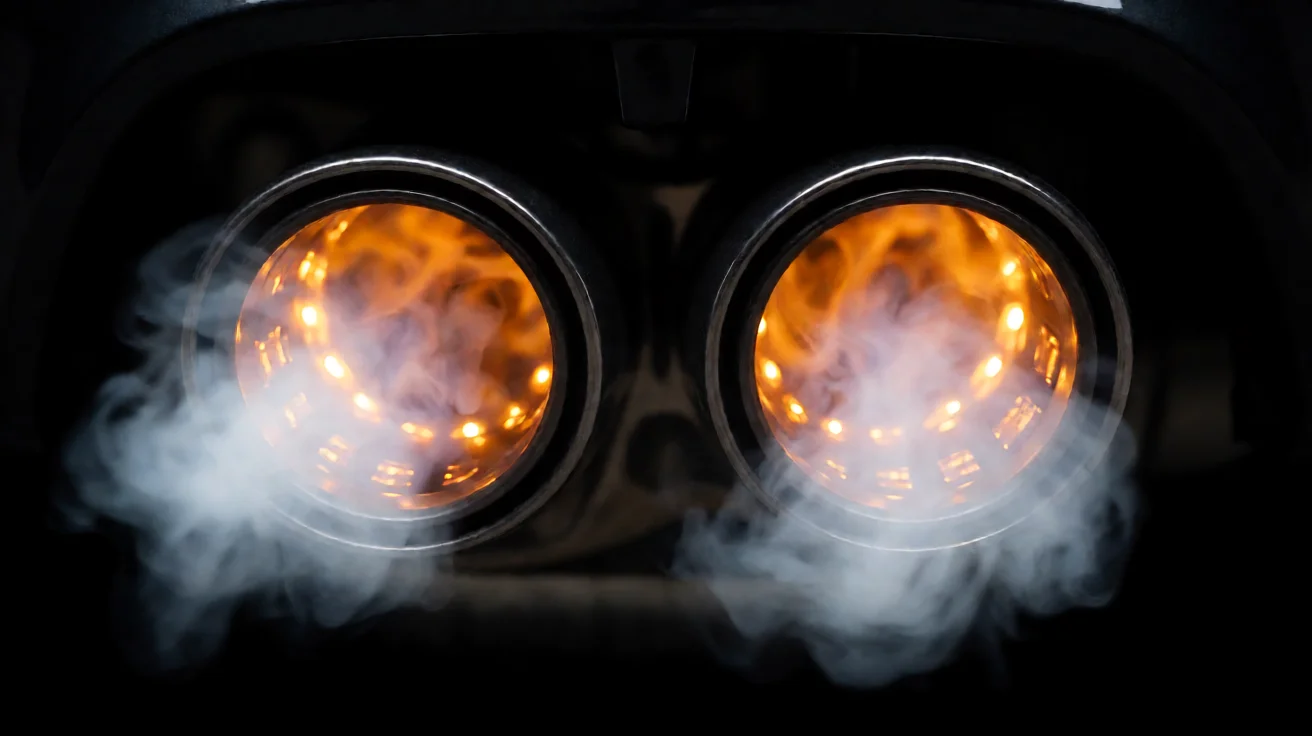
The concept: a scale display model of a licensed sports car, in which the only mist outlets are the two central exhaust tips. The car is cordless, runs a 120-minute session on its internal battery, charges over USB-C, and is silent — no speaker, no beeps.
The engineering highlights, taken directly from the buyer’s spec:
- Mist exits only from inside the two exhaust tips; any emission from a body seam or beside a tip is a failure.
- Both mist streams visible within 10 seconds of a correct start; total output 30–60 mL/h across both tips.
- No spitting, drips or wet spots on the body or the table during a full session — the product must survive being filmed.
- Water and fragrance go in only through the fuel flap on the front fender, into a single sealed tank; spills can never reach the battery or electronics.
- Cordless: one full 120-minute session on the internal battery, USB-C charging, and while the cable is connected the unit only charges.
- Four modes — OFF / MIST / PULSE / LIGHT — with PULSE giving a silent mist boost from both tips every 90–150 seconds.
- Mist stops within 2 seconds when water runs low; everything stops at the 120-minute timer; nothing restarts by itself.
- Tank capacity 100–120 mL, sized so a full PULSE session stays inside the water budget.
This is what “the points that matter most to us” looks like when a buyer has done the work. Note what the spec does not do: it does not dictate the internal layout — it defines the acceptance criteria and asks the supplier to propose the architecture and the minimum practical size. That is the correct division of labor.
If you want to see how a custom project runs end-to-end, our custom ceramic reed diffuser OEM case study walks through a comparable process. For the broader budget picture when importing aroma diffusers from China, see Chapter 1: budget and import basics and the Chapter 2 import process guide. Our existing car diffuser and ultrasonic diffuser ranges show the production hardware these custom builds are based on.
Budget quick reference
| Item | Indicative cost |
|---|---|
| Industrial + structural design | ~USD 3,700 |
| Electronics development | ~USD 910 |
| Tooling (car example) | ~USD 22,000 |
| Certification | ~USD 820 |
| Unit price at volume | ~USD 20–40 |
These figures are the planning baseline for the car project; your concept’s complexity, size and target market will move them. A dueling-wand set (two units, synchronized) is a different engineering problem from a single dragon.
Ready to build yours?
Bring us the reference video or sketch. We will tell you which atomization route it needs, whether it needs a license or an original ID, and what it will cost to develop — before you spend anything on tooling. Contact us with your concept.

 English
 Spanish